

Quick Overview: What Is Cross-Border Ecommerce?
Cross-border ecommerce is the practice of selling products through an online store to consumers in other countries. In Japan, it is known as "ekkyo EC."
Here are the three key points of this article:
- How it works: The basic flow from listing to payment and shipping is the same as domestic ecommerce. What changes is that international shipping, customs clearance, import duties, and import regulations are added.
- Pros: You can sell directly to overseas consumers without a local entity or physical store, and test foreign markets with a small upfront investment.
- Cons: You have to deal with shipping costs, country-specific taxes and rules, language and cultural differences, exchange rate swings, and the challenge of attracting customers abroad.
According to Japan's Ministry of Economy, Trade and Industry (METI), Chinese consumers spent ¥2.756 trillion on cross-border ecommerce purchases from Japanese businesses in 2025, up 4.5% year on year. This article walks first-time readers through what cross-border ecommerce means, how it works, the main sales channels, and its pros and cons.
What Is Cross-Border Ecommerce? A Simple Definition
Cross-border ecommerce means selling products through an online store to consumers across national borders. "Ecommerce" (electronic commerce) refers to buying and selling online, and "cross-border" means the buyer and seller are in different countries.
The term covers both a Japanese business selling to overseas consumers and a Japanese consumer buying from a foreign online store. When a business talks about "starting cross-border ecommerce," however, it usually means selling to customers abroad. This article focuses on that case: a business selling to consumers in other countries.
Cross-Border vs. Domestic Ecommerce
Cross-border ecommerce differs from domestic ecommerce in three areas: logistics, taxes, and import regulations. JETRO (Japan External Trade Organization) also points out that the basic sales flow from listing to payment and shipping is the same as at home, but logistics, taxes, and import rules require research and preparation in advance.
| Item | Domestic ecommerce | Cross-border ecommerce |
|---|---|---|
| Sales flow | Listing → purchase and payment → order confirmation → packing → shipping | Same as domestic |
| Logistics | Domestic delivery | International shipping. A commercial invoice is required for customs. Cash on delivery is unavailable in many regions |
| Taxes | Domestic consumption tax | Import duties apply in the destination country. In some regions, you may be liable for VAT (value-added tax) |
| Import rules | Only domestic laws | Some products (such as chilled or frozen food and alcohol) cannot be sold in certain countries |
| Language and currency | Japanese and yen | You need to support the buyer's language, currency, and payment methods |
Cross-Border Ecommerce vs. Traditional Exporting
The difference between cross-border ecommerce and traditional exporting is who you sell to. Traditional exporting usually means negotiating with overseas importers or buyers and trading in bulk. Cross-border ecommerce means selling directly to overseas consumers through an online store. JETRO lists "you can start selling without negotiating with local buyers" as one of its advantages.
Even so, physical goods still cross a border, so customs procedures and import duties still apply. Selling online does not exempt you from trade procedures.
How Cross-Border Ecommerce Works
Cross-border ecommerce works like domestic ecommerce, with international shipping and customs clearance in the destination country added on. Here is the flow from order to delivery:
- The business lists products on its online store or a marketplace
- An overseas consumer buys a product and pays
- The business confirms the order and packs the product
- The product is shipped abroad by international mail or courier
- Customs in the destination country clears the package, and import duties and other taxes are charged where applicable
- A local carrier delivers the product to the consumer
Two Fulfillment Models: Direct Shipping and Local Warehouses
Cross-border fulfillment falls into two models: "direct shipping," where each order is sent from Japan, and "local warehousing," where inventory is sent to a warehouse in the destination country in advance. Using the US as an example, JETRO describes both models. The table below summarizes them along with when each one makes sense.
| Model | How it works | Best for |
|---|---|---|
| Direct shipping | Each order is shipped individually from Japan to the consumer. The seller handles packing, shipping, and customer service | Early stages with few orders, or when you do not want to hold inventory abroad |
| Local warehousing | Products are sent in bulk to a local warehouse (such as an Amazon fulfillment center), which handles storage, packing, and shipping | When order volume grows and you want faster delivery and lower shipping costs |
Who Pays Import Duties? DDP vs. DDU
Import duties can be paid either by the seller or by the buyer. When the seller pays duties and taxes, the arrangement is called DDP (Delivered Duty Paid). When the buyer is charged, it is called DDU (Delivered Duty Unpaid).
Under DDU, the consumer pays the duties when receiving the package. JETRO warns that if buyers are not told about these charges at the time of purchase, it can lead to refused deliveries and other problems. Decide which approach to use and state clearly on your product pages how duties are handled.
Types of Cross-Border Ecommerce: Your Own Store vs. Marketplaces
There are two main ways to sell cross-border: through your own online store or through a marketplace. With your own store, you build a multilingual, multi-currency online shop and sell directly. With a marketplace, you list products on an established platform where overseas shoppers already gather, such as Amazon.com or eBay. Some businesses use both.
Based on JETRO's materials, here are the pros and cons of each approach.
| Item | Your own online store | Marketplace |
|---|---|---|
| Main pros | You collect and keep your own customer data. No marketplace fees, so margins are easier to protect. More freedom in design and features, which helps build your brand. You control pricing and sales management | The sales system is ready from day one. Strong built-in traffic, so your products are easier for shoppers to find. Easy for ecommerce beginners to get started |
| Main cons | Building and running the store takes upfront investment and staff. Heavy operational load: logistics, payments, customer inquiries, translation. Hard to gain recognition and attract customers abroad | Listing and referral fees cut into margins. Many competitors and similar products, which tends to drive price wars. Many restrictions on design, wording, and trading rules |
If you want to grow your own brand and build direct relationships with customers, your own store is the natural choice. If you want to borrow a marketplace's traffic and test demand first, a marketplace is a good option. Neither is universally better. The right choice depends on your team, budget, operations, and long-term strategy.
How Big Is the Cross-Border Ecommerce Market?
The cross-border ecommerce market keeps growing. According to METI's FY2025 Market Research on Electronic Commerce (Reiwa 7), cross-border ecommerce between Japan, the US, and China grew in every direction in 2025.
In particular, Chinese consumers spent ¥2.756 trillion on cross-border purchases from Japanese businesses, up 4.5% from the previous year. The same survey found that Japan's domestic B2C ecommerce market reached ¥27.6 trillion in 2025, with an ecommerce penetration rate (the share of all commerce conducted online) of 9.80%. Alongside the domestic market, sales to overseas consumers are also expanding.
Pros of Cross-Border Ecommerce
The biggest advantage of cross-border ecommerce is that you can sell directly to overseas consumers without setting up a local base. Here are five key advantages, drawn from JETRO's materials and other sources.
1. Reach New Markets Abroad
Cross-border ecommerce lets you sell directly to online shoppers around the world and find new customers. According to population estimates from Japan's Statistics Bureau, Japan's total population was 122,812,000 as of May 1, 2026, down 530,000 (0.43%) from a year earlier. With the population continuing to decline, being able to add new revenue streams instead of relying solely on the home market matters a great deal for Japanese businesses.
2. Test Overseas Markets With a Small Investment
Compared with setting up a local entity or opening a physical store, cross-border ecommerce lets you enter foreign markets with far less upfront investment. JETRO also describes it as a way to run test marketing (trying a market on a small scale before a full launch). You can see where your products sell before deciding on a full-scale expansion.
3. Leverage the Reputation of Japanese Products
Cross-border ecommerce lets you turn the positive image of Japanese products, seen as high quality, safe, and reliable, into a selling point. Products considered ordinary in Japan can stand out abroad simply because they are made in Japan.
4. Hear Directly From Overseas Customers
Through reviews and inquiries, you learn firsthand what overseas buyers think of your products and how they actually use them. These insights, which are hard to get when selling through distributors, can feed into product development and better marketing.
5. Export Sales Are Exempt From Japanese Consumption Tax
When a sale to an overseas customer qualifies as an export transaction, it is exempt from Japanese consumption tax. To claim the exemption, you must keep documents proving the export. According to Japan's National Tax Agency, when goods are exported by post and their value exceeds ¥200,000, you need an export permit certified by customs. For ¥200,000 or less, you must keep records such as Japan Post's proof of acceptance for seven years.
Cons of Cross-Border Ecommerce
The main drawback of cross-border ecommerce is the extra work and cost that domestic ecommerce does not involve. Here are five key challenges.
1. Shipping Is Costly and Complex
International shipping can cost more than expected. You also need to handle delays, lost packages, and inventory management. Research shipping rates and methods in advance and build them into your prices.
2. Country-Specific Duties, Taxes, and Import Rules
Every destination country has its own import and export regulations, duty rules, and value-added taxes, and it is up to you to check and comply with them. Some products, such as chilled or frozen food and alcohol, cannot be sold in certain countries at all.
These rules can change. For example, the US has suspended its de minimis exemption, which waived duties on low-value shipments of $800 or less, so even inexpensive items now go through the same customs and duty procedures as regular cargo. Check JETRO and the destination country's customs information before you launch, and keep checking regularly after that.
3. Language, Culture, and Business Practices
You need a multilingual store and customer support. On top of that, buyers expect local payment methods and site designs that suit their preferences, which is known as localization. Some products also require attention to religious requirements (such as halal) and cultural norms.
4. Exchange Rates Affect Your Profits
Currency fluctuations change your margins. When the yen strengthens, the same foreign-currency price brings in less revenue once converted to yen. Decide in advance when you will review prices, and set prices with exchange rate risk in mind.
5. Attracting Customers Abroad Is Hard
Your brand recognition in Japan often means little overseas, so customer acquisition is a major challenge. Your own online store in particular lacks the built-in traffic of a marketplace, so you need to bring in prospects yourself through SEO for overseas search engines, social media, and email newsletters. JETRO also stresses that effective promotion is essential for generating sales.
How to Minimize the Downsides of Cross-Border Ecommerce
You do not need to solve every challenge before you start. You can start small and address the downsides step by step. Here is one way to think about each one.
| Challenge | How to reduce it |
|---|---|
| Shipping costs | Start with direct shipping, and consider a local warehouse once orders grow |
| Taxes and regulations | Narrow down your target countries and products, and check only those countries' rules first |
| Language and culture | Go beyond translation and adapt wording and presentation to each market |
| Exchange rates | Use a tool that converts and displays foreign-currency prices automatically, and review prices regularly |
| Customer acquisition | Track traffic and response by country, and focus on the countries that respond best |
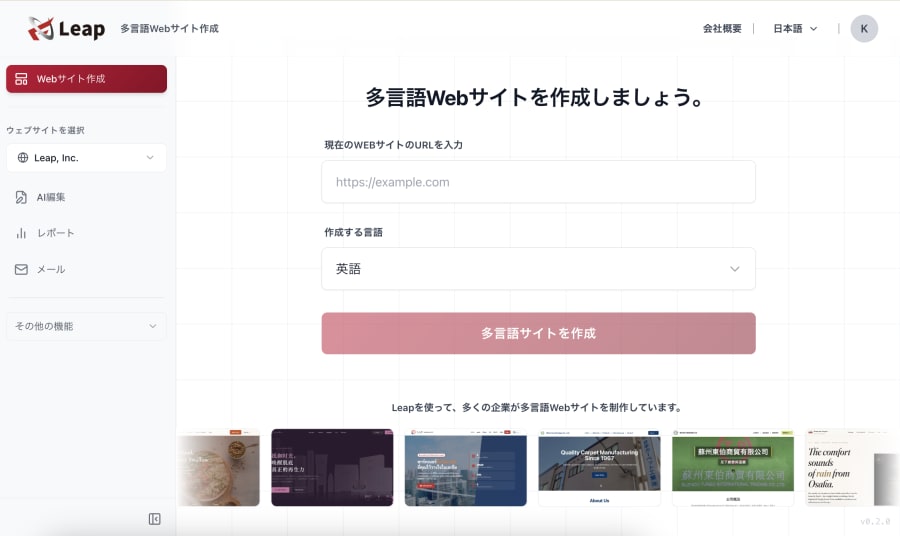
For example, Leap, a cross-border ecommerce tool that lets AI handle marketing too, includes analytics that show traffic by country, so you can see which countries are showing interest and use it for country-by-country test marketing. When you choose one base currency for each product, Leap converts it using the previous day's exchange rate and automatically displays the price in the other supported currencies (USD, EUR, and JPY) every day (as of November 2026).

FAQ
Q. What is the difference between cross-border ecommerce and exporting?
A. The difference is who you sell to. Traditional exporting usually means trading in bulk with overseas importers or buyers, while cross-border ecommerce means selling directly to overseas consumers through an online store. In both cases, goods cross a border, so customs and import duties still apply.
Q. How big is the cross-border ecommerce market?
A. According to METI, Chinese consumers spent ¥2.756 trillion on cross-border purchases from Japanese businesses in 2025, up 4.5% year on year. Cross-border ecommerce between Japan, the US, and China grew in every direction compared with the previous year.
Q. Can small businesses and individuals start cross-border ecommerce?
A. Yes, small businesses and sole proprietors can start cross-border ecommerce. You do not need a local entity or physical store, and you can start small by listing on a marketplace or building your own store with a tool that supports multiple languages and currencies. Researching shipping, taxes, and regulations is still necessary regardless of your size.
Q. Do I have to pay Japanese consumption tax on cross-border sales?
A. No, sales that qualify as export transactions are exempt from Japanese consumption tax. To claim the exemption, you must keep proof of export, such as an export permit or Japan Post's proof of acceptance. Note that import duties or value-added tax may still apply in the destination country.
Summary and Key Takeaway
Cross-border ecommerce is selling products through an online store to consumers in other countries. The sales flow is the same as domestic ecommerce, with international shipping, customs, duties, and import rules added on. You can sell through your own store or through marketplaces, and each has its strengths and weaknesses.
Reading about cross-border ecommerce, you may feel overwhelmed by the list of downsides. But most of them come not from selling abroad itself, but from trying to sell to many countries with everything perfectly in place from day one. If you narrow down your target countries and products and expand step by step based on how each market responds, cross-border ecommerce becomes a way to test overseas markets with far less risk than setting up a local base. Start by deciding which country's consumers you want to reach, and with which products.
Leap is a cross-border ecommerce tool that lets AI handle marketing too. Just chat with it to build a multilingual, multi-currency online store and run overseas marketing such as SEO and email newsletters.
References
- Results of the FY2025 Market Research on Electronic Commerce (in Japanese) - Ministry of Economy, Trade and Industry
- Cross-Border Ecommerce Basics: Selling on Amazon Overseas (2026, in Japanese) - JETRO
- No.6551 Tax Exemption for Export Transactions (in Japanese) - National Tax Agency
- Population Estimates (May 2026 final, October 2026 preliminary; in Japanese) - Statistics Bureau of Japan