
[Quick Summary] When In-House Shipping Hits Its Limits — and How to Know It's Time to Switch
When monthly orders reach 100 or 200 shipments, most EC operators run into the same wall: in-house fulfillment becomes a bottleneck. Packing, labeling, and dropping off at the carrier consumes hours every week, while the work that actually drives growth — marketing, product development — keeps getting pushed back. Third-party logistics (3PL) services have emerged as the standard solution for breaking through that ceiling.
This article covers everything operationally relevant: the difference between 3PL and fulfillment services, a cost simulation comparing in-house shipping versus outsourcing at various order volumes, a selection checklist, and the impact of Japan's 2024 Logistics Reform on shipping costs. If you've been wondering whether 3PL makes sense at 100 orders per month — or how the fixed and variable cost structure actually works — this article answers both.
When In-House Shipping Reaches Its Limit
As an EC business grows, fulfillment eventually becomes the constraint. According to a survey by Japan's Ministry of Economy, Trade and Industry (METI), Japan's domestic BtoC-EC market exceeded ¥26 trillion in 2024, and competition among EC operators continues to intensify. Continuing to absorb fulfillment work internally in that environment carries a real opportunity cost.
Three indicators signal when it's time to seriously consider making the switch.
Monthly Shipments Exceed 50–100 Orders
Above 50 orders per month, packing, printing shipping labels, and running to the carrier can start consuming 10 or more hours per week. At 100 orders monthly, 15–25 hours per week spent on fulfillment tasks is not unusual. That time redirected to product development or paid media would compound meaningfully on revenue growth.
Peak Seasons Create Backlogs
Seasonal demand spikes — year-end, Valentine's Day, Mother's Day — can overwhelm in-house capacity, leading to shipping delays and fulfillment errors. A single "shipping was slow" in a customer review takes considerable time to undo in terms of rating recovery.
Packing Errors and Mis-Shipments Are Rising
Higher volume creates more exposure to human error: wrong addresses, incorrect items, packaging failures that cause product damage in transit. These incidents hit customer satisfaction directly and create downstream costs for resolution. Professional 3PL warehouses run barcode-verified picking using WMS (warehouse management systems), which substantially reduces mis-shipment rates.
3PL vs. Fulfillment: Clarifying the Terms
When evaluating outsourced logistics, the terminology can be confusing. Here's how 3PL, fulfillment, and 4PL relate to each other.
What Is 3PL (Third-Party Logistics)?
According to Japan's Ministry of Land, Infrastructure, Transport and Tourism (MLIT), 3PL (Third Party Logistics) refers to the practice of planning the most efficient logistics strategy on behalf of a shipper and executing that strategy comprehensively under contract.
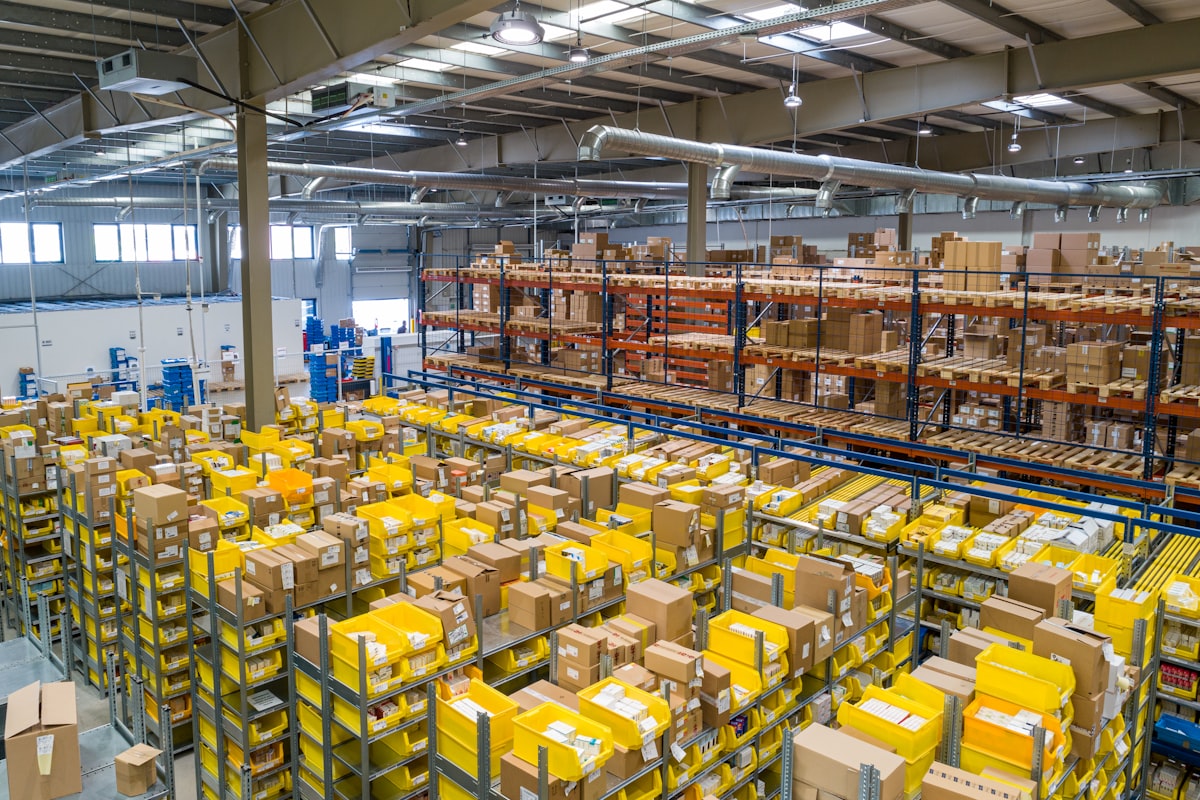
In practice, this means outsourcing physical logistics operations — inbound receiving, inspection, storage, picking, packing, outbound shipping, and returns handling — to an external specialist. The EC operator ships inventory to the 3PL warehouse and the provider handles everything from there.
There are three operational models within 3PL. The operations outsourcing model handles all physical logistics on behalf of the shipper. The systems-only model provides warehouse management technology while the shipper runs operations. The full-service model combines both. For operators without deep logistics expertise who need to ensure fulfillment quality from day one, the full-service model offers the most stability.
3PL providers also divide into asset-based (owning their own warehouses) and non-asset-based (partnering with warehouse and carrier networks). Asset-based providers can invest directly in service quality; non-asset-based providers offer more flexibility to scale up or down with demand.
How Fulfillment Differs from 3PL
Where 3PL focuses specifically on logistics operations, fulfillment services cover a broader scope — order management, payment processing, inventory management, shipping, customer support, returns and exchanges, customer data management, and EC platform operations. Fulfillment providers essentially run EC operations on your behalf.
The decision between 3PL and fulfillment comes down to how much you want to retain in-house control versus how much you want to hand off.
In-House Shipping vs. 3PL: A Cost Simulation by Monthly Order Volume
"It sounds expensive" is the assumption that most often stops operators from looking further into 3PL. The numbers tend to look different when examined directly.
How 3PL Pricing Is Structured
3PL service costs typically break down as follows.
Setup fees (registration) run ¥0–¥50,000, with many providers charging nothing upfront. Monthly fixed fees range from ¥0–¥30,000. Inbound receiving and inspection charges run ¥10–¥30 per unit. Storage charges typically fall in the range of ¥3,000–¥8,000 per tsubo (approximately 3.3 m²) per month. Picking and packing runs ¥100–¥300 per order.
For shipping rates, 3PL providers negotiate high-volume contracts with carriers — meaning they can typically offer EC operators better per-shipment rates than those operators could negotiate individually.
At 100 orders per month with average single-item shipments, the combined cost per shipment for picking, packing, and delivery typically lands in the ¥600–¥900 range.
The True Cost of In-House Shipping
In-house shipping costs are not just the cost of postage. When you account for the items most easily overlooked, the real total is often larger than assumed.
Packaging materials (cardboard boxes, tape, cushioning) are a recurring expense. Labor is the biggest cost driver: a staff member at ¥1,500/hour spending 20 hours per week on fulfillment generates roughly ¥120,000 in monthly labor cost alone. Adding in carrier drop-off travel time, the cost of handling errors and re-shipments, and seasonal temp hiring during peak periods — the "invisible" costs of in-house shipping add up to a substantial figure.
Where the Break-Even Point Falls
At around 100 monthly shipments, the total cost of in-house shipping and 3PL outsourcing is often roughly comparable. Beyond that volume, 3PL frequently comes out lower on a total-cost basis. The structural reason: in-house fulfillment costs are largely fixed (staff, space), while 3PL costs are variable, scaling with actual shipment volume. As the business grows and team capacity would otherwise need to expand, the variable-cost model of 3PL becomes structurally more favorable.
Storage costs vary significantly by product size and inventory turnover. A store with small, lightweight products and one with large items can see storage costs differ by 2–5x for the same shipment volume. Getting quotes from multiple providers is strongly recommended before making a decision.
Japan's 2024 Logistics Reform and Its Impact on Shipping Costs
Anyone evaluating logistics outsourcing in Japan should understand the 2024 Logistics Reform. From April 2024, truck driver overtime was capped at 960 hours per year under Japanese labor law revisions. This has reduced overall transport capacity and put upward pressure on shipping costs across the board.
For EC operators negotiating directly with carriers, leverage is limited — especially at small-to-mid scale. By contrast, 3PL providers aggregate shipment volumes from many clients and hold high-volume contracts with Japan's major carriers, Yamato Transport and Sagawa Express. This aggregated volume creates pricing advantages that individual operators cannot replicate on their own.
In an environment where logistics costs continue to rise due to the 2024 reform, routing shipments through a 3PL provider's carrier contracts is a practical and realistic cost optimization lever for small and mid-sized EC businesses.
Packaging Quality as a Competitive Differentiator
The business case for 3PL goes beyond cost reduction. Packaging quality has a direct impact on customer satisfaction, repeat purchase rates, and brand perception.
When a package arrives, the first thing the customer experiences is not the product — it's the packaging. An oversized box with too much empty space, or inadequate protection on a fragile item, erodes trust in the store immediately. Thoughtful, well-executed packaging does the opposite: it creates the conditions for repeat purchases.
Standardized Packaging at the Professional Level
3PL providers run standardized packing operations. Box sealing methods (cross-seal and H-seal taping patterns), cushioning material matched to product dimensions, and insert placement are all governed by documented procedures that ensure consistent quality across every order.
Peak season is when in-house packaging most often degrades in quality. Professional fulfillment staff maintain output standards regardless of volume.
Expanding Gift and Custom Insert Capabilities
As an EC business scales, demand for gift wrapping, noshi (traditional Japanese gift labels), message card inserts, and assorted bundles increases. Handling all of these in-house multiplies labor complexity and materials management overhead considerably.
Established providers like Scroll360 offer 20–30 wrapping configurations and provide custom noshi inscription printing as part of their service. Outsourcing these value-added tasks lets the EC operator stay focused on core business activity.
Choosing a 3PL Provider: Four Criteria
With many providers in the market, narrowing the field to one that fits your operation comes down to four factors.
1. Service Scope and Warehouse Capabilities
What a 3PL can handle varies considerably by provider. Confirm upfront that the provider can support your specific requirements — whether that's refolding apparel, cosmetics inspection, gift wrapping, or multi-item bundle assembly. For products requiring controlled storage conditions (cosmetics, food), verify cold or temperature-specific capabilities individually.
2. Warehouse Location
Warehouse location directly affects delivery speed and shipping rates. Providers with facilities in the greater Kanto region (Saitama, Chiba, Kanagawa) can typically offer next-day delivery to areas covering roughly 80% of Japan's population. The order cutoff time for same-day dispatch is also an important variable to confirm.
3. Pricing Transparency
Get a full breakdown at the quote stage — not just setup and monthly fixed fees, but storage, picking, and packaging materials line by line. Confirm whether there are minimum monthly shipment requirements and whether peak-season surcharges apply.
4. Scale and Growth Headroom
Choose a provider who can handle not just your current volume, but your projected volume three to six months out. Switching providers after growth means moving inventory, which carries both cost and operational risk. Confirm the provider's track record during peak seasons as well.
Case Studies: Businesses That Transformed Operations with 3PL
STOCKCREW Client Case Study
STOCKCREW (operated by KEYCREW Co., Ltd.) is a 3PL provider with API integrations across Japan's major EC platforms — Rakuten Ichiba, Amazon Japan, Yahoo! Shopping, BASE, and Shopify. One client eliminated 20+ hours per week of in-house packing entirely, redirecting that capacity to advertising operations and new product development. The result: 1.5x revenue growth in six months. Their "Omakase-bin" feature — which automatically selects the lowest-cost option between Yamato Transport and Sagawa Express for each shipment — also drove meaningful reductions in per-shipment delivery costs.
E-Logi (EC-Specialized 3PL)
E-Logi is one of Japan's most established EC-specialized 3PL providers, with an extensive track record across apparel, general merchandise, and food products. Their particular strengths are in value-added services: distribution processing, gift wrapping, and bundle assembly. E-Logi has handled fulfillment for major EC brands, and is frequently cited as a top-tier option for operators with complex packaging requirements or high-volume needs.
FAQ
Q. What's the minimum monthly order volume to work with a 3PL provider?
Requirements vary by provider. Services like OpenLogi (a Japan-based 3PL platform) operate with no minimum order volume and no setup fee — suitable for small-scale starting points. Other providers are structured for 200+ monthly orders and above. A practical rule of thumb: when in-house packing exceeds 10 hours per week (typically around 50+ monthly orders), it's worth getting quotes from two or three providers. Actual cost-effectiveness depends heavily on product size, storage volume, and order mix, so bring your specific numbers when requesting a simulation.
Q. How long does it take to get up and running after signing a contract?
From contract signing through inventory transfer, system integration setup (API connections or CSV import configuration), and initial test shipments, the ramp-up period is typically two to four weeks. Switching providers in the lead-up to a peak season carries risk — inventory movement timing and initial configuration issues can compound. The recommended approach is to transition during a normal-demand period, and to start with a subset of SKUs or channels to validate the setup before going fully live.
Q. We sell on multiple EC platforms. Can everything be managed from one place?
Most 3PL providers support API integrations with Japan's major marketplaces — Rakuten Ichiba, Amazon Japan, Yahoo! Shopping, BASE, and Shopify. Centralizing order data means all orders route through the same warehouse regardless of which platform they came from, eliminating split inventory management and duplicate data entry. However, coverage varies by provider — confirm that every channel you sell through is supported before committing. The initial cart-to-WMS integration setup will require some technical coordination, so plan to use the provider's technical support during onboarding.
Conclusion: Fulfillment Automation Is Something You Can Start Now
Many operators who sense that in-house shipping has reached its limit still hold off on 3PL because it "sounds expensive" or "feels too early for our scale." In practice, multiple 3PL providers are accessible starting from 50–100 monthly orders, and on a total-cost basis, outsourcing frequently comes out ahead of in-house fulfillment at that volume.
In an environment of rising logistics costs driven by Japan's 2024 Logistics Reform, individual operators working directly with carriers are at a structural disadvantage compared to those routing through a 3PL's bulk contracts. And beyond the cost math: being freed from 10–20 hours of weekly packing work creates the capacity to focus on marketing, product development, and customer experience — the activities that actually compound revenue.
The practical first step is requesting quotes from two or three providers and running your own break-even simulation. Getting started tends to feel easier than it looks from the outside.
Leap publishes ongoing practical content for EC operators and businesses pursuing cross-border expansion — covering logistics, operations, and overseas marketing. If you're exploring multilingual EC site builds or serious entry into international markets, explore the articles below.
For cross-border EC and overseas selling resources: https://www.leap.site/en/blog/
References
- Top 5 EC Logistics Services 2026 (STOCKCREW)
- D2C No.201: Using Fulfillment and Logistics Outsourcing Services (ec-force)
- How to Choose an EC Logistics Outsourcing Service (Grop Outsourcing Pro)
- The Role of 3PL in EC Logistics (UL-Logi)
- How to Choose an EC Fulfillment Provider (EMEAO!)
- Packaging Methods (UL-Logi)
- EC Site Packing and Gift Wrapping Outsourcing (Scroll360)
- Japan METI: E-Commerce Market Survey (FY2024)
- Japan MLIT: Comprehensive Logistics Policy Outline
- Japan MLIT: 3PL Business Comprehensive Support