


Quick Overview: It's Less "Which One Sells Better" and More "Which Acquisition Model Fits You"
Behind a search like "BASE vs. STORES, which one sells better" is usually a genuine question: which platform makes it easier to grow sales? But the short answer up front is that there's no inherent "sells more" or "sells less" built into either platform. What matters is whether the acquisition mechanisms each one offers actually fit how you run your business. This guide compares BASE's buyer-facing "PAY ID" app against STORES' Instagram integration and blog features — two genuinely different approaches — to help you figure out which fits your own strategy.
BASE's Acquisition Model: Getting Discovered Inside the "PAY ID" App
BASE's defining feature is its dedicated buyer-facing app, "PAY ID." Any merchant running a BASE shop can list it in PAY ID for free from their admin dashboard. This gives you an entry point into a buyer community unique to shops built on BASE.
Inside PAY ID, how well you fill out your shop description and shop category affects how easily you show up in search, and the "follow" feature lets you build an ongoing relationship with repeat customers. Shops with followers automatically trigger a push notification every time a new product is registered, and sending is free no matter how many you send. In short, BASE has its own acquisition channel built into a self-contained buyer community within the platform — separate from your own website or social media. That said, this is acquisition within a limited community of existing BASE users, not a mechanism for growing new traffic from outside the platform — worth keeping that distinction in mind.
STORES' Acquisition Model: Integration With External Social and Content
STORES, by contrast, centers its acquisition features on integration with external social media and content. The standout feature is "Instagram Sales Integration": published items registered on STORES sync automatically to a connected Facebook catalog once a day, and once that integration is approved, you can tag products directly in Instagram posts — creating a path that drives traffic straight from Instagram to your product pages. STORES also offers integrations with other social platforms, including LINE and note.
STORES also has a "News" feature, which lets you publish blog-style articles tied to your products directly on your shop. Publishing content related to what you sell lays the groundwork for organic search traffic (SEO). Where BASE's PAY ID app is built around acquisition from buyers already inside the platform, these STORES features are built around pulling in social media users and search-engine visitors from outside the platform — that's the key difference in design philosophy between the two.
Choosing Based on "Do You Run Your Own Marketing, or Lean on the Platform?"
Put simply: BASE's acquisition model is built around nurturing a relationship with followers starting from the in-platform buyer community (PAY ID), while STORES' model is built around pulling in traffic from external social media users and search engines through Instagram and the News feature.
That said, no matter which platform you choose, BASE's own guidance states plainly that "since you can't rely on a marketplace's traffic, you need to attract customers yourself" — and as an independent store-building service, neither platform makes sales happen automatically just by signing up. The acquisition features each platform provides are training wheels that support your own marketing efforts, not a replacement for them. Day-to-day work — running social media, publishing content, running ads — is the foundation either way, on both BASE and STORES.
When thinking through your own strategy, the real question is which fits where you already have strength and what kind of acquisition style you want to build: do you already have a strong Instagram following you want to build sales on top of? Do you want to be discovered fresh inside BASE's buyer community? Do you want to grow organic search traffic steadily through blog content?
How to Sell Internationally With BASE and STORES
Both BASE and STORES offer a proxy-purchase model that lets you sell to overseas buyers just by shipping to a warehouse in Japan. Here are the differences that can be confirmed from official information as of November 2026:
| Item | BASE "Kantan Kaigai Hanbai" (Easy Overseas Sales) | STORES "Overseas Sales Integration" |
|---|---|---|
| Launch | Made a standard feature for all shops on March 18, 2026 | Launched July 7, 2026 |
| How it works | Subsidiary want.jp buys on the customer's behalf and handles international shipping | Integrates with ZIGZAG's WorldShopping BIZ, which handles international shipping and customs |
| Cost to the shop | 5% of the order total (product price plus domestic shipping); plan fees apply separately | The integration is free; STORES usage fees apply separately |
| Cost to the buyer | Agency fee (10% of product price plus domestic shipping, min. ¥500, max. ¥3,000) plus a payment fee | 10% purchasing agency fee on product price plus domestic shipping |
On the acquisition side, the key point is that "being able to sell overseas" and "being found by overseas shoppers" are two different things. BASE's official help page states that Easy Overseas Sales does not support purchases made through the Pay ID app, which is the core of BASE's acquisition model. The STORES press release for its overseas integration likewise focuses on shipping, payment, and multilingual customer support, and does not mention any overseas marketing features.
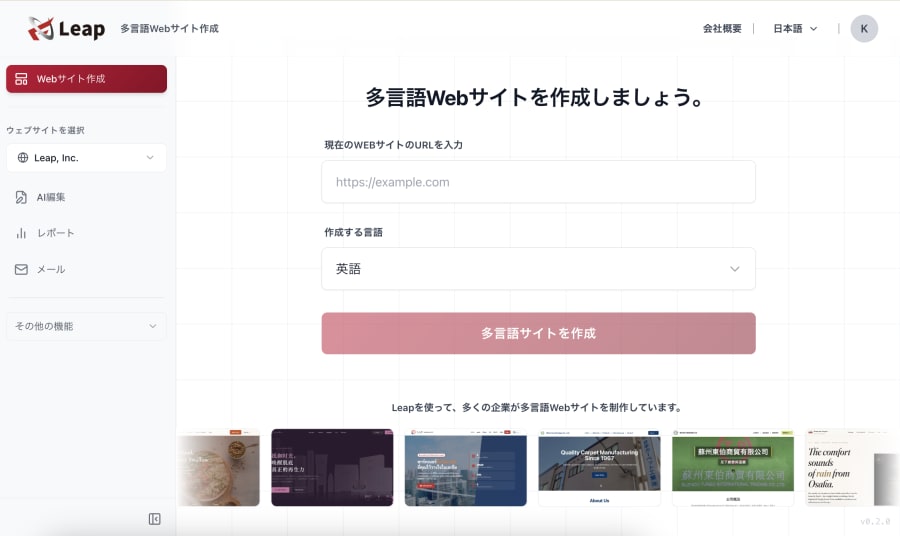
So whichever platform you choose, bringing in overseas buyers means preparing your own foreign-language product descriptions, social media posts, and articles that help people find you through search. The idea from earlier in this article, choosing based on the acquisition style that fits your strengths, applies just as much to overseas sales. If you want to handle overseas articles and email newsletters in one place, you can also pair your shop with Leap, a cross-border ecommerce tool that lets AI handle marketing too.
FAQ
Q. Which sells better, BASE or STORES?
A. There's no inherent "sells better" difference between the platforms. BASE's strength is acquisition within its in-platform buyer community via the PAY ID app, while STORES' strength is building external traffic through Instagram integration and blog content. A realistic approach is to choose based on which acquisition style you want to center your strategy on.
Q. Do I need to handle acquisition myself either way?
A. Yes. Unlike marketplace-style platforms like Amazon or Rakuten, neither BASE nor STORES automatically brings in customers for you. Whichever you choose, your own work — running social media, publishing content — forms the foundation of acquisition.
Q. Can I use both BASE's PAY ID app and STORES' Instagram integration together?
A. Whichever platform you choose, you can still promote your shop on social media, and building out a thorough shop description or repeat-customer tactics matters regardless. That said, the specific features covered here — the PAY ID app and Instagram Sales Integration — are each tied to their own platform, so you can't use both features as described directly together.
Q. How do the fees for international sales differ between BASE and STORES?
A. With BASE's Easy Overseas Sales, the shop pays 5% of the order total, while with STORES' Overseas Sales Integration, the integration is free for the shop and the overseas buyer pays 10% of the product price plus domestic shipping (as of November 2026). On BASE, plan fees are charged separately, and overseas buyers also pay an agency fee and a payment fee.
Summary and Key Takeaway
The honest answer to "BASE or STORES, which sells better" is closer to "it depends on how well you make use of the acquisition mechanism each platform gives you." BASE offers an entry point into its PAY ID buyer community; STORES offers an entry point into external traffic through Instagram integration and blog content. The question isn't which is objectively better — it's which matches the strength you already have (an existing social following, or a knack for content) and the acquisition channel you actually want to grow. That's what leads to a platform choice you won't regret.
Leap is a cross-border ecommerce tool that lets AI handle marketing too. Just chat with it to build a multilingual, multi-currency online store and run overseas marketing such as SEO and email newsletters.
References
- 7 Things to Check to Sell Well in the "PAY ID" App - BASE U
- What Is the "PAY ID App"? - Help | BASE
- How to Set Up Instagram Sales Integration to Sell Products Through Instagram - STORES Magazine
- What Is SEO for an Online Shop? A Complete Guide to SEO on STORES - STORES Magazine
- What Is the News Feature? - Help | STORES
- FAQ: Getting Started - BASE U
- About "Kantan Kaigai Hanbai" (Easy Overseas Sales) - Help | BASE
- BASE Makes "Kantan Kaigai Hanbai" a Standard Feature From March 18 - PR TIMES
- STORES Online Shop Launches "Overseas Sales Integration" for 228 Countries and Regions With No Setup or Monthly Fees - PR TIMES