0. Introduction
Why a Simply Translated Site Fails in Spanish-Speaking Markets
Spanish is the world's second most spoken native language — with approximately 500 million native speakers across 21 countries spanning Spain, Mexico, Colombia, Argentina, Peru, and much of Latin America, plus over 60 million Spanish speakers in the United States. The Spanish-speaking world is vast, diverse, and commercially rich.
The key challenge: "Spanish" is not one thing. The differences between Spain Spanish (Castilian) and Latin American Spanish are meaningful — in vocabulary, formality conventions, and cultural references. And within Latin America, Mexico City Spanish differs from Buenos Aires Spanish, which differs from Colombian Spanish. Getting the variant right signals respect for the audience; getting it wrong signals corner-cutting.
This guide covers the variant management, legal, technical, and design considerations for building Spanish-language websites that work across this enormous market.
1. Understanding the Local Internet Environment and Rules
1-1. Writing Standards: Adapting Spanish for Your Target Region
The major Spanish variants you'll encounter in digital contexts:
- Castilian Spanish (es-ES): Spain's standard. Uses "vosotros" as the second person plural (informal group), which is not used anywhere in Latin America. Spain Spanish uses the "leísmo" pronoun convention. Vocabulary has many differences from Latin American Spanish — "ordenador" (computer) vs. "computadora/computador," "coche" (car) vs. "carro/auto." If your primary market is Spain, es-ES is essential.
- Mexican Spanish (es-MX): The largest single Spanish-speaking market by population. Often used as the Latin American standard for web content given Mexico's media influence. Uses "usted" (formal) and "tú" (informal) — no "vosotros." Mexican Spanish has significant influence from indigenous languages (Nahuatl, Maya) and US English.
- River Plate Spanish (es-AR, Buenos Aires): Argentina and Uruguay use "vos" as the informal second person (instead of "tú"), with specific conjugations. This is immediately distinctive and cannot be used interchangeably with other Latin American variants without sounding wrong.
- US Spanish (es-US): Spanish for the US Hispanic market is influenced by English and shows significant regional variation (Mexican-American, Cuban-American, Puerto Rican-American, etc.). Many US Hispanic users prefer content that acknowledges their bilingual context.
- Neutral Latin American Spanish: A broadly understood standard that avoids Argentina's "vos" and Spain's "vosotros" — uses "usted" for formal, "tú" for informal, with vocabulary choices that are broadly understood across Latin America. Appropriate when a single Spanish version must serve all of Latin America.
Set appropriate lang attributes: es-ES, es-MX, es-AR, etc. Spanish uses ñ, á, é, í, ó, ú, ü, ¿, ¡ — ensure font and CMS handle all Spanish characters correctly.
1-2. Speed and Access Barriers: Handling Regulations and Third-Party Tools
Spain and most of Latin America operate open internet environments. Key regional considerations:
❌ Common issues for Spanish-language websites
- · Using Spain-specific vocabulary for Latin American audiences (or vice versa) — immediately signals cheap localization
- · Missing GDPR cookie banner for Spain (EU member state)
- · Serving Latin American users from European servers without a CDN — significant latency to Mexico, Colombia, Argentina
Latin America's internet infrastructure varies significantly by country — Mexico, Brazil, Colombia, Argentina, and Chile have relatively good connectivity, while other countries have slower and more expensive mobile data. Optimization for mid-range mobile is important for comprehensive Latin American reach.
1-3. Laws and Licensing: Local Requirements to Check Before Going Live
Spain and Latin America have distinct regulatory frameworks:
- GDPR (Spain/EU): Spain is an EU member state — full GDPR compliance is required. The Spanish DPA (AEPD — Agencia Española de Protección de Datos) is an active EU enforcement authority. Cookie consent banner, privacy policy, and all standard GDPR requirements apply.
- Latin American data protection laws: Most Latin American countries have enacted data protection legislation. Mexico has LFPDPPP (Federal Law on Protection of Personal Data in the Private Sector). Colombia has Law 1581 of 2012. Argentina has LPDP (Personal Data Protection Law). Chile, Peru, and others have their own frameworks. For pan-Latin American deployments, a privacy policy that addresses the major regulatory frameworks is advisable.
- Consumer protection varies by country: Each Latin American country has its own consumer protection laws. Common requirements across the region include clear pricing, return policies, and Spanish-language product information. Mexico's Profeco and Colombia's SIC are active consumer protection agencies.
2. Content and SEO Strategies That Perform Locally
2-1. Localized Content Creation: Trustworthy Information That Resonates
Spanish-speaking audiences across different markets have distinct content preferences:
- Spain — formal and professional: Spanish business culture is relatively formal. B2B content uses "usted" as the default. Spanish consumers appreciate thorough information and resist high-pressure sales tactics.
- Mexico — warm and relationship-focused: Mexican business culture values warmth and personal connection. Marketing copy can be more emotional and relational. Mexican consumers are highly social-media-active — influencer and social content drives significant purchase decisions.
- Argentina — conversational and direct: Argentine culture is characterized by directness and confidence. The "vos" form is essential for targeting Argentines authentically. Argentine consumers are sophisticated and skeptical of marketing clichés.
- US Hispanic — bilingual flexibility: US Hispanic consumers often move between Spanish and English. Some prefer Spanish-dominant content; others prefer bilingual. Testing both formats with your specific US Hispanic target audience is worthwhile.
2-2. SEO Optimization: Targeting Local Search Engines
Google dominates search across all major Spanish-speaking markets — approximately 95%+ in Spain and most of Latin America. Standard Google SEO applies with important hreflang complexity:
- hreflang for multi-country Spanish: This is the most technically complex aspect of Spanish-language SEO. If you have separate content for es-ES, es-MX, es-AR, and es-US, hreflang tags tell Google which version to serve to users in each country. Without hreflang, Google may serve the wrong variant — or consolidate your pages and reduce individual ranking authority.
- Spanish keyword research by market: Search terms vary significantly across Spanish markets. "Telefonos móviles" (Spain) vs. "celulares" (Latin America). "Piso" (Spain) vs. "apartamento" (Latin America) for apartment. Always conduct keyword research specific to each target market.
- Local SEO per country: For businesses with physical presence in specific Spanish-speaking countries, country-specific Google My Business listings with the appropriate Spanish variant are important for local search visibility.
- Content authority: Spanish-language content has high competition in major categories — investing in genuinely authoritative, well-researched Spanish content (not just translation) is necessary to achieve strong rankings.
2-3. Choosing a Domain and Server: How Infrastructure Affects Your Rankings
Server strategy for Spanish-language websites depends on your primary target market:
- Spain (EU): AWS Madrid (eu-south-2) — AWS's newest European region opened in 2022 in Madrid. AWS Paris or Ireland are viable fallbacks. GDPR data residency expectations favor EU hosting.
- Mexico/Latin America: AWS São Paulo (sa-east-1) is the nearest South American AWS region. For Mexico, AWS US-East (Virginia) or US-West (Oregon) offers lower latency (~30–50ms to Mexico City) than São Paulo. Google Cloud has a region in Santiago, Chile. Cloudflare has extensive Latin American PoPs including Mexico City, Bogotá, Buenos Aires, and Lima.
- Pan-Latin America: A CDN (Cloudflare) with Latin American PoPs is the most practical solution for consistent performance across the geographically dispersed Spanish-speaking world.
Domain choice: .es for Spain (requires EU/EEA presence). Country-code TLDs (.mx, .co, .ar, .cl) for country-specific deployments. .com is universally accepted across all Spanish-speaking markets.
3. Design and Font Best Practices for Spanish Websites
3-1. Color Psychology and Cultural Meaning: The Right Colors for Your Market
Color associations vary across the Spanish-speaking world, reflecting distinct national and cultural identities:
- 🔴 Red: Passion, energy, and power — universally associated with Spain (bullfighting, flamenco, the Spanish flag). Widely used for CTAs across Latin America as well. The default "action" color in Spanish-language web design.
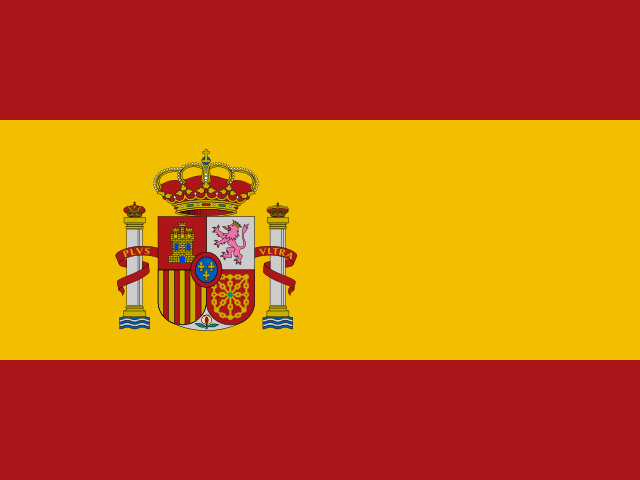
- 🟡 Yellow/gold: The Spanish flag's yellow; also associated with wealth and celebration across Latin America. Used with red for culturally Spanish-identified design contexts.
- 🔵 Blue: Trust and professionalism — the universal B2B and finance color also applies in Spanish-speaking markets. Safe and broadly effective.
- 🟢 Green: Nature, health, and growth — positive across all Spanish-speaking markets. Mexico: associated with the flag's green. Argentina: associated with the flag and national identity. Broadly safe.
3-2. Recommended Fonts and Sizes: Settings for Optimal Readability
Spanish uses the Latin alphabet with accented characters and two unique characters (ñ, ü). Standard Latin web fonts support all Spanish characters:
"Inter" is clean, modern, and universally legible across Spanish-speaking markets. For Spain and European Spanish contexts, slightly more formal typefaces (Playfair Display for luxury, Lato for professional) can reinforce brand positioning. For Latin American youth-oriented brands, more expressive display fonts work well.
Body text at 16px, line-height 1.6–1.8. Spanish text is typically 15–25% longer than English equivalents (Romance language constructions add words and articles). Ensure all UI components can accommodate Spanish text length — this is especially important for buttons, navigation, and card titles where truncation is most likely.
3-3. Layout and Information Density: Design Trends That Resonate
Design preferences vary across the Spanish-speaking world:
- Spain — European minimalism: Spanish design follows Western European trends — clean, restrained, quality-focused. Excessive visual noise is perceived as lower quality.
- Latin America — vibrant and conversion-focused: Latin American digital design is generally more vibrant, color-rich, and emotionally expressive than European Spanish design. Strong visuals, bold color, and clear value communication perform well.
- Mobile-first throughout: Mobile is the dominant access device across essentially all Spanish-speaking markets. Mobile-first card layouts, fast loading, and thumb-friendly navigation are baseline requirements.
- Social proof: Reviews, ratings, and user testimonials are highly effective across all Spanish-speaking markets — particularly for e-commerce and service industries.
4. Contact Options and Social Media Integration
4-1. Building Conversion Paths: Contact Options and Social Media Channels
Contact preferences vary by market within the Spanish-speaking world:
- WhatsApp (Latin America — essential): WhatsApp is the dominant communication platform across virtually all of Latin America — for both personal and business communication. A WhatsApp Business button is essential for any Latin American consumer-facing website. In many Latin American markets, WhatsApp is more effective as a first contact channel than email or phone.
- WhatsApp (Spain — increasingly common): WhatsApp is also widely used in Spain for personal communication and increasingly for business. A WhatsApp Business option adds a low-friction contact path for Spanish consumers.
- Instagram and TikTok (Latin America): Instagram is heavily used for product discovery and brand following across Latin America. TikTok is rapidly growing as a commerce platform in Mexico and Colombia in particular. A well-maintained Spanish-language Instagram presence builds trust and drives discovery.
- Email and LinkedIn (Spain B2B): Spanish B2B communication relies on email and LinkedIn. A professional contact form and LinkedIn company page are standard for Spain-focused B2B services.
4-2. Mobile Optimization: Adapting to a Mobile-First Society
Mobile is the primary internet access device across most Spanish-speaking markets. Latin America is particularly mobile-dominant — in Mexico, Colombia, and Argentina, over 80–90% of internet users are on smartphones.
- Android dominance in Latin America: Android holds 80–90% market share across most of Latin America. Optimize specifically for Android Chrome. Budget and mid-range Samsung and Motorola devices are common — test on representative mid-range hardware.
- WhatsApp in-app browser: Massive proportion of Latin American web traffic arrives through WhatsApp link shares. Test and optimize for WhatsApp's in-app browser rendering.
- Spain: Spain has higher iOS market share than most Latin American markets (~30–35%). Optimize for both iOS Safari and Android Chrome.
- Page performance: Spain and major Latin American cities (Mexico City, Bogotá, Buenos Aires) have fast connections. Smaller cities and rural areas have slower mobile connections — target sub-3 second load times on simulated mid-range mobile connections.
5. Summary
Checklist for Building a Successful Spanish Website
- ✔ Have you chosen the correct Spanish variant (es-ES, es-MX, es-AR, neutral Latin American) and been consistent throughout?
- ✔ If serving multiple Spanish-speaking countries, have you implemented hreflang tags correctly for each country/variant combination?
- ✔ For Spain: is your GDPR/AEPD-compliant cookie consent banner in place?
- ✔ For Latin America: is WhatsApp Business integrated as a primary contact channel?
- ✔ Have you conducted keyword research specific to your target Spanish market — not just translated English keywords?
- ✔ Have you tested all UI components with Spanish text, which is typically 15–25% longer than English?
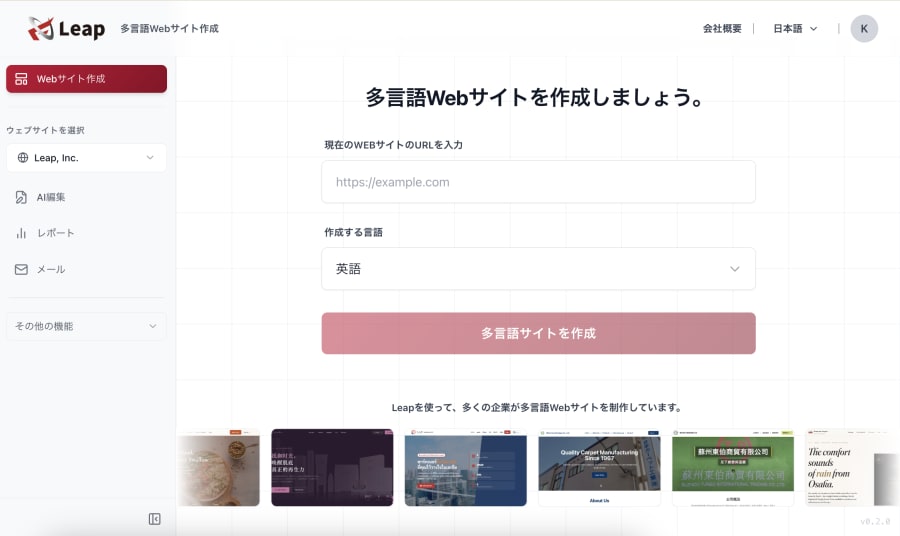
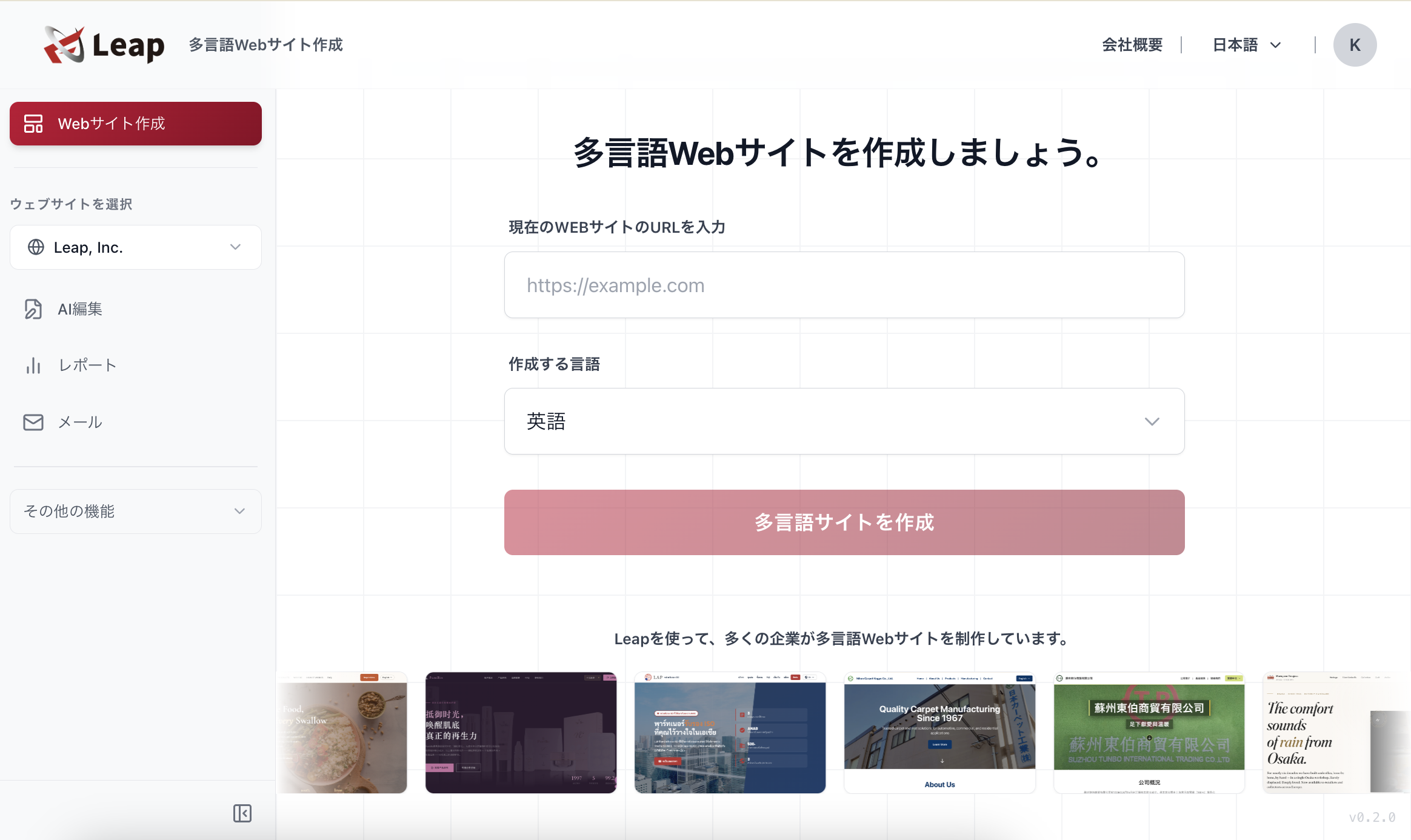
The variant management complexity, hreflang implementation across 21 countries, and the Latin American-specific platform ecosystem make Spanish-language websites more demanding than their European-market equivalents. Leap handles the localization infrastructure and hreflang setup — so your Spanish website serves each market correctly from launch.