


Quick Overview: Choose a Korean Marketplace by Whether You Can Join Directly from Japan
When choosing a marketplace for selling to South Korea, the fastest first step is to check whether a Japan-based business can sign up and run a store on its own. As of November 2026, Coupang is the marketplace that publishes a Japanese-language seller guide and support line for sellers in Japan. Signing up is free, and you pay a category-based sales commission when an item sells.
Gmarket and 11st are built mainly around sellers based in Korea. Gmarket's sign-up page requires verification of a Korean business registration number, and 11st restricts access to its seller portal from outside Korea. If you want to sell on them from Japan, confirm the procedure in advance or work with a Korean sales agency.
In this article, we check how to join, seller fees, and logistics for all three marketplaces against each company's official pages, then walk through a Coupang fee estimate, the basics of Korean import duty, and how to combine a marketplace with your own online store.
What Is a Korean Cross-Border Marketplace?
A Korean cross-border marketplace is an online mall where Korean consumers shop every day, and where you can open a store to deliver products from Japan to buyers in Korea. Because you borrow the marketplace's traffic, payment system, and buyer trust, it is easier to win your first orders even before your brand is known in Korea.
Korea also has sales channels other than marketplaces, such as NAVER Smart Store. This article focuses on the three that sellers in Japan most often consider: Coupang, Gmarket, and 11st.
Korean Marketplace Comparison Table (as of November 2026)
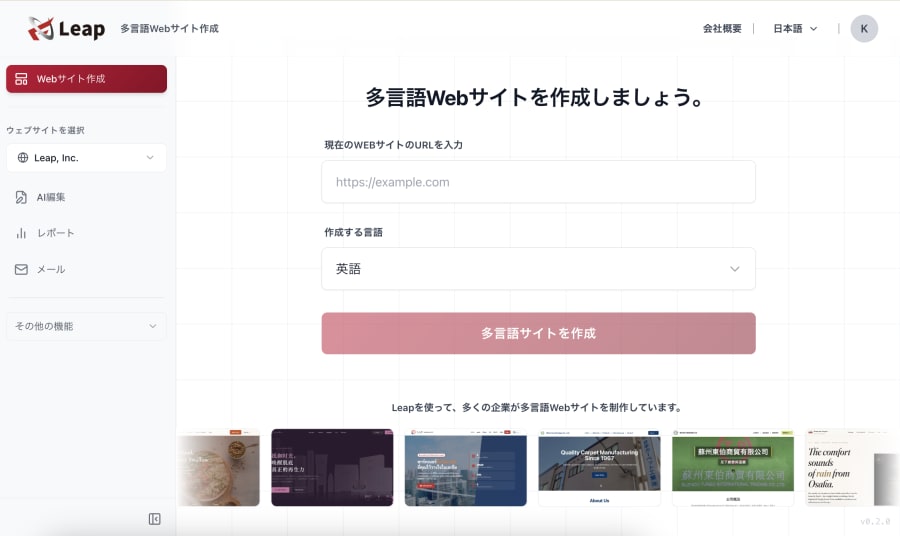
The table below compares the three marketplaces by pricing, fees, cross-border support, marketing features, and B2B support. For reference, it also includes Leap, a cross-border ecommerce tool that lets AI handle marketing too, as an option for running your own store. Information is as of November 2026, checked on each company's official pages; items we could not confirm on public pages are marked as such.
| Item | Coupang | Gmarket | 11st | For reference: Leap (own store) |
|---|---|---|---|---|
| Joining as a Japan-based seller | Japanese-language seller guide and Japan phone line | Sign-up page requires a Korean business registration number | Seller portal restricts access from overseas IPs (IP allowlist request required) | Available from Japan |
| Setup / monthly fees | No sign-up fee | Not confirmed on public pages | Not confirmed on public pages | From JPY 0/month (excl. tax) |
| Sales commission | By category (e.g., Beauty 9.6%, Food 10.6%, Fashion 10.5%, Household 7.8%); 3% processing fee on shipping charges | Not confirmed on public pages | Not confirmed on public pages | 6% of sales (incl. card processing fees) |
| Cross-border support (language, currency, payment) | Seller portal in Korean, English, and Chinese; sign-up documents accepted in Japanese; payment handled on the marketplace | Sign-up page (ESM PLUS) in Korean; payment handled on the marketplace | Payment handled on the marketplace | Multilingual; USD/EUR/JPY; Visa/Mastercard; South Korea is a supported country |
| Logistics | Ship yourself, or store inventory in Japan with CGF Japan (launched August 2026) | Not confirmed on public pages | Not confirmed on public pages | Ship yourself |
| Marketing features | Advertising on Coupang | Not confirmed on public pages | Not confirmed on public pages | Automated blog posts (SEO/AIO), email newsletters, CRM |
| B2B support | No dedicated features found in the official seller guide | No dedicated features found in the official seller guide | No dedicated features found in the official seller guide | B2B cart (customer-specific pricing, quote requests) |
A marketplace lets you sell where Korean buyers already are, while your own store means bringing buyers to your site, so the two play different roles. Note that Leap does not display prices in Korean won (supported currencies are USD, EUR, and JPY), and it offers less design and feature customization than tools such as Shopify.
Coupang: The Easiest Korean Marketplace to Join Directly from Japan
Coupang is a Korean ecommerce marketplace that runs a Japanese-language seller site for businesses in Japan. Its seller site describes Coupang as "the most used online shopping app in Korea" and says it has more than 20 million active users.
How to Start Selling on Coupang
Selling on Coupang takes three steps.
- Register a seller account: There is no sign-up fee. You need four documents: a business license, an ID, proof of business ownership, and a bank statement. If all documents are submitted correctly, registration usually takes up to five business days
- Complete KYC verification: Once your store is approved, complete KYC (identity verification) to receive payouts. You need copies of your passport and business license
- List your products: Either match your offer to an existing product page or create a listing from scratch
Since November 2023, sellers in Japan have been able to submit their business license, ID, bank account information, and KYC documents in Japanese. The seller portal (WING) is available in Korean, English, and Chinese. Coupang does not offer a translation service, so you need to prepare Korean product pages yourself or use a provider from Coupang's service provider network.
Coupang Seller Fees
Coupang's sales commission is set by product category. According to Coupang's official pricing page, the standard rates for major categories as of November 2026 are as follows.
| Category | Standard sales commission |
|---|---|
| Beauty | 9.6% |
| Food | 10.6% |
| Fashion | 10.5% |
| Household goods | 7.8% |
| Kitchenware | 10.8% |
| Digital appliances | 7.8% |
Some products have different rates depending on their detailed category (for example, rice and grains within Food are 5.8%). In addition to the sales commission, there is a 3% delivery processing fee on shipping charges. There is no sign-up fee.
Coupang Logistics: CGF Japan
On August 20, 2026, Coupang officially launched Coupang Global Fulfillment (CGF) Japan, a logistics service for sellers in Japan. Sellers send inventory in bulk to a designated fulfillment center in Japan, and once an order comes in from Korea, Coupang handles picking, packing, international freight, customs clearance, and last-mile delivery in Korea.
- Badge: Products fulfilled through CGF automatically get the "Rocket Jikgu (Overseas)" badge
- Delivery time: Coupang says products reach Korean customers in a few days
- Getting started: Register as a seller and send products to the CGF fulfillment center, and your listings go live with the badge
If you do not use CGF, you either ship to Korea yourself or use logistics from a provider in Coupang's service provider network.
Gmarket: Registration Assumes a Korea-Based Seller
Gmarket is a Korean ecommerce marketplace operated through ESM PLUS, the seller portal it shares with Auction. A single ESM PLUS account gives you access to Gmarket, Auction, and ESM PLUS.
Gmarket offers three seller account types: individual sellers, business sellers, and overseas direct-purchase sellers. The official sign-up page states that both business sellers and overseas direct-purchase sellers register by verifying a business registration number, and must file a mail-order business report to start selling. The required documents include a business registration certificate, and these are all procedures under Korean rules.
For this reason, a Japan-based business without a presence in Korea has two main options for selling on Gmarket.
- Register with a Korean presence: Complete Korean business registration and the mail-order business report, then sign up
- Work with a Korean sales agency: Have a company that is already a registered seller in Korea list and sell your products
Note that Gmarket Global is a site that sells Korean products to buyers outside Korea. It is not a channel for businesses in Japan to sell to Korean consumers. We could not find the sales commission on the public sign-up page.
11st: Using the Seller Portal from Overseas Requires a Request
11st is a Korean ecommerce marketplace operated by 11Street Co., Ltd. The first thing a seller in Japan should know is that 11st's seller portal, Seller Office, restricts access from overseas to strengthen security.
According to 11st's official notice, accessing Seller Office from outside Korea requires the following request.
- Check your IP address: Only IPv4 addresses are supported, and you can request up to five per seller ID
- Send a request email: Send your seller ID, IP addresses, and a copy of your business registration certificate to the dedicated address
- Wait for approval: Requests are processed within three business days, and no individual reply is sent
You must reapply whenever your IP address changes, and access may be difficult in environments where the IP address changes often, such as mobile data or public Wi-Fi. We could not confirm seller registration procedures or sales commissions on public pages from outside Korea. If you want to sell on 11st from Japan, work with a Korean sales agency or confirm the conditions with 11st's seller support before registering.
Coupang Fee Estimate: Selling a KRW 30,000 Cosmetic
Using the rates on Coupang's official pricing page, we estimated the fees for one cosmetic product priced at KRW 30,000 (Beauty, standard rate 9.6%) sold with a KRW 3,000 shipping charge (as of November 2026; our own estimate).
| Item | Calculation | Amount |
|---|---|---|
| Sales commission | KRW 30,000 × 9.6% | KRW 2,880 |
| Delivery processing fee | KRW 3,000 × 3% | KRW 90 |
| Total | KRW 2,970 |
That works out to about 9% of the total sale (KRW 33,000 including shipping) going to Coupang. In practice, you also pay international shipping from Japan to Korea, CGF fees if you use it, and ad spend if you advertise. Think of a marketplace's fees as including the cost of bringing Korean buyers to you, and compare them with the cost and effort of attracting customers to your own store.
Korean Import Duty Basics for Shipping to Korea
According to the Korea Customs Service, goods for personal use that arrive by express courier are exempt from customs duty and VAT if their total customs value, including shipping, is USD 150 or less (for goods from the US, the limit for list import declaration is USD 200). Above USD 150, customs duty and VAT are calculated on the total customs value.
- Personal Customs Clearance Code: List import declaration requires the recipient's resident registration number (including the personal clearance code). If you sell through your own store, setting up a way to collect the buyer's personal customs clearance code makes customs clearance smoother
- Goods excluded from list import declaration: Drugs, medicinal herbs, agricultural, fishery, and livestock products subject to quarantine, health supplements, foods, alcoholic beverages and tobacco, and certain cosmetics (such as those containing placenta or steroids) are excluded from the simplified list declaration. If you sell food, health foods, or cosmetics, check the rules for each product category in advance
How to Choose a Korean Marketplace
Narrowing things down in the following four steps makes it easier to choose a Korean marketplace.
- Decide whether to join directly or work with an agency: If you want to open and run a store yourself, Coupang, with its Japanese-language seller guide and support line, is the main candidate. If you want to sell on Gmarket or 11st, working with a Korean sales agency is the realistic route
- Decide on logistics: Choose between storing inventory in Japan and letting Coupang handle delivery (CGF Japan) or shipping yourself
- Check category rates and regulations: Sales commissions vary by category. For food, cosmetics, and health foods, also check Korea's import rules
- Prepare Korean product pages: Coupang does not offer a translation service, so prepare Korean product names and descriptions yourself or hire a translation company
When to Use a Korean Marketplace vs. Your Own Store
When selling to Korea, the practical approach is to combine a marketplace and your own store, each with its own role.
- A marketplace fits when: you want to test whether your products sell in Korea, you want to be found in the apps Korean consumers already use, or you want to hand off delivery to a service like CGF
- Your own store fits when: you want to convey your brand's world, build repeat customers through direct relationships with Korean shoppers, or do wholesale deals with corporate buyers in Korea
Once you see which products do well on Coupang, you can build a Korean-language store of your own and grow branded searches and repeat purchases through email newsletters and blog content. If you lack the capacity to market your own store, tools such as Leap, a cross-border ecommerce tool that lets AI handle marketing too, let you set South Korea as a sales country and run blog and newsletter marketing through chat. For a multi-country comparison, see also Amazon vs eBay vs Shopee: Best Marketplaces to Sell Internationally from Japan.
FAQ
Q. Can a Japanese company sell on Coupang?
A. Yes. Coupang publishes a Japanese-language seller guide and a Japan phone line for sellers in Japan, and sign-up documents can be submitted in Japanese. You need four documents: a business license, an ID, proof of business ownership, and a bank statement.
Q. Does it cost money to sell on Coupang?
A. There is no sign-up fee; you pay a category-based sales commission when an item sells. As of November 2026, standard rates include 9.6% for Beauty, 10.6% for Food, and 10.5% for Fashion, plus a 3% delivery processing fee on shipping charges.
Q. Can I sell on Gmarket or 11st directly from Japan?
A. Joining on your own from Japan is difficult, so having a presence in Korea or working with a Korean sales agency is the realistic route. Gmarket's sign-up page requires verification of a Korean business registration number and a mail-order business report, and 11st restricts access to its seller portal from overseas.
Q. Do Korean buyers pay import duty?
A. Goods for personal use that arrive by express courier are exempt from customs duty and VAT if the total, including shipping, is USD 150 or less. Above USD 150, customs duty and VAT are charged on the total value.
Summary and Key Takeaway
Comparing Korean marketplaces shows that the real difference is less about fee levels and more about whether the door is open to sellers in Japan. Coupang offers a Japanese-language seller guide, sign-up in Japanese, and CGF Japan with a fulfillment center in Japan, making it easy to start directly from Japan. Gmarket and 11st, on the other hand, assume Korean business registration, so working with an agency is the realistic route from Japan.
Another takeaway is that a marketplace's fees include the cost of bringing Korean buyers to you. Test demand on Coupang first, then build customer relationships through your own store for the products that gain traction. This two-step approach is a practical way for small and mid-sized businesses to expand sales in Korea without overreaching.
Leap is a cross-border ecommerce tool that lets AI handle marketing too. Just chat with it to build a multilingual, multi-currency online store and run overseas marketing such as SEO and email newsletters.
References
- Global Selling Home - Coupang Marketplace
- About Coupang Marketplace - Coupang Marketplace
- Step-by-step guide - Coupang Marketplace
- FAQ - Coupang Marketplace
- How much does selling on Coupang cost? - Coupang Marketplace
- Coupang Global Fulfillment (CGF) Officially Launches in Japan - Coupang Marketplace
- A Simpler Sign-up Process for Japanese Sellers - Coupang Marketplace
- Seller sign-up - ESM PLUS (Gmarket and Auction)
- Gmarket Global - Gmarket
- Seller Office overseas IP access restriction notice - 11st
- Clearance procedures for express cargo - Korea Customs Service
- Pricing - Leap