


Quick Overview: Choose a Fulfillment Partner by Scope of Work and Fee Structure
Once you start selling cross-border, overseas shipping brings a sudden jump in workload — storage, packing, customs paperwork, and arranging international carriers. Many sellers outsource this to a fulfillment or shipping agency, but the fee structure and scope of service vary a lot between providers. This guide breaks down what a cross-border shipping agency fee typically includes and how to choose one, using OPENLOGI's cross-border fulfillment service as a concrete example and comparing it against handling international carriers yourself.
What a Cross-Border Shipping Agency Actually Handles
A cross-border shipping agency (or fulfillment provider) stores your inventory, picks and packs orders as they come in, prepares customs paperwork like invoices, and hands packages off to an international carrier — all outsourced to one company. The main appeal is being able to start shipping overseas without running your own warehouse.
How much falls under "handled for you" varies by provider: some support everything up through checking prohibited items and preparing customs documents, while others stick closer to the scope of a domestic shipping service. Before reaching out to any provider, it's worth deciding exactly what you want outsourced — just storage and packing, or customs handling too.
How the Fees Break Down
Cross-border fulfillment fees generally fall into these categories:
- Setup and monthly base fees — some providers charge none at all
- Storage fees — based on how much inventory you hold and for how long
- Fulfillment fees — picking and packing per order
- International shipping costs — what you pay carriers like EMS, DHL, or FedEx
- Optional fees — things like inspection or gift wrapping
Many providers quote storage and shipping fees only after hearing about your products and shipping volume, rather than publishing a flat rate card. Rather than judging the total cost from a published fee table alone, it's worth confirming exactly what scope of work each fee covers at the quoting stage.
OPENLOGI's Cross-Border Fulfillment Service (as of November 2026)
As one example of a fulfillment outsourcing service that supports cross-border shipping, here's what OPENLOGI's official site states:
- No setup fee and no fixed monthly fee — it's pay-as-you-go based on actual usage
- Inbound storage and shipping fees are quoted individually after a consultation about your logistics needs
- It works with multiple international carriers, including EMS, DHL, and FedEx, proposing a shipping method suited to your product and situation
- Support covers carrier selection, invoice preparation, and checking customs duties and prohibited items
- For building and running the cross-border EC site itself, OPENLOGI can introduce an outside partner company
The clear advantage here is being able to outsource overseas shipping without taking on fixed costs. That said, since specific storage and shipping fees are only quoted after a consultation, it's hard to compare an exact total cost up front.
Handling International Carriers Yourself
Instead of using an agency, you can also work directly with international carriers like EMS (Japan Post's international express mail) or DHL Express. Per DHL's official site, DHL Express rates are calculated based on origin, destination, and the weight and size of the package (including dimensional weight), with fuel surcharges and other add-on fees sometimes applying.
If you handle this yourself, storage, packing, and customs paperwork all fall on your own team, and the workload grows with your shipment volume. The upside is skipping the monthly base fees and handling charges an agency would otherwise bill. One practical approach: handle it in-house while volume is low, then switch to an agency once your team can no longer keep up.
Comparison Criteria and Where Leap Fits
When comparing cross-border shipping agencies, these are the criteria worth checking:
| Item | OPENLOGI (using a fulfillment agency) | Handling it yourself (direct with EMS, DHL, etc.) | Leap |
|---|---|---|---|
| Fee structure | Pay-as-you-go, no setup or fixed monthly fee | Carrier shipping rates + your own labor cost | 6% of cross-border EC sales (fee includes credit card processing) |
| Storage and fulfillment | Handled by the agency | Handled in-house | Not applicable (a site-building and marketing tool) |
| Customs paperwork and carrier arrangement | Supported (carrier selection, invoice prep) | Handled in-house | Not applicable |
| Per-product country targeting | — | — | You can set which countries each product is sold in (it's hidden elsewhere) |
| Best fit | Sellers who want to outsource shipping without their own warehouse or staff | Sellers with low shipment volume who can handle it in-house | Sellers who want AI to handle everything from building a cross-border site through multilingual marketing |
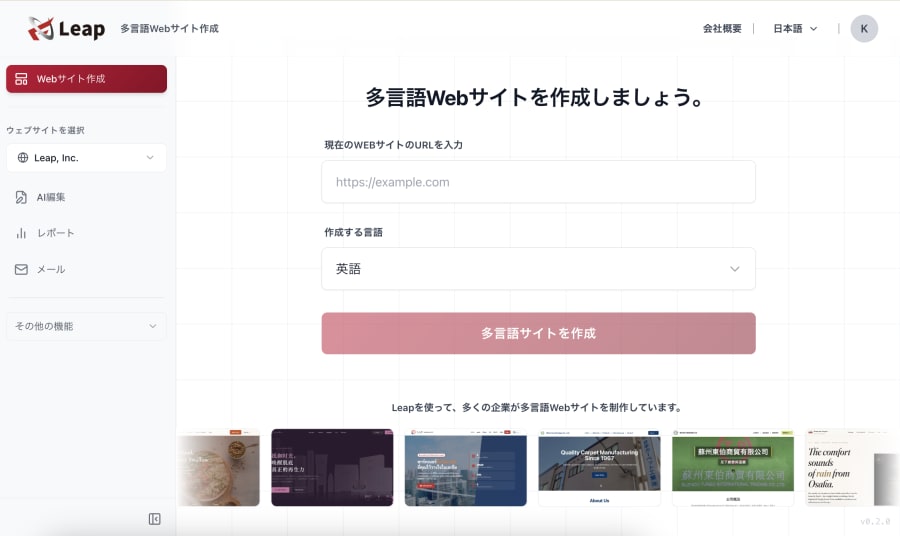
Leap is a cross-border ecommerce tool that lets AI handle marketing too — it isn't a shipping agency with its own warehouse. It doesn't handle storage, packing, or international shipping itself, but its ability to set which countries each product is sold in makes it something you'd pair with a fulfillment provider rather than a substitute for one. If what you want to outsource is the shipping workload itself, a fulfillment agency is the right tool; if you want AI to handle everything from building your site through multilingual marketing, that's where Leap comes in — the two solve different problems.
FAQ
Q. How much does cross-border shipping outsourcing cost?
A. It breaks down into storage fees, fulfillment fees, international shipping costs, and optional fees, and most providers quote these individually after asking about your products and shipment volume. You can't judge the total cost from a published rate card alone — you need to confirm it at the quoting stage.
Q. What's the difference between a shipping agency and EMS or DHL?
A. EMS and DHL are the carriers that actually move the package internationally. A shipping agency is the company that handles storage, packing, customs paperwork, and handing the package off to a carrier like EMS or DHL — the agency itself still relies on a carrier for the final leg.
Q. Should I ship it myself or use an agency?
A. It mostly comes down to shipment volume and how much staff time you have. At low volume, handling it yourself is manageable, but once storage, packing, and customs paperwork start outpacing your team's capacity, that's the point to consider switching to an agency.
Q. What should I check when choosing a shipping agency?
A. The scope of work you want covered (just storage and packing, or customs handling too), the fee structure (fixed fees vs. pay-as-you-go), which international carriers they work with, and any minimum contract terms.
Summary and Key Takeaway
A cross-border shipping agency lets you outsource storage, packing, customs paperwork, and carrier coordination, and some providers let you start with no fixed costs at all. That said, actual pricing is usually quoted individually after a consultation, so confirming what scope of work each fee covers is a step you can't skip. Whether handling it yourself or outsourcing is the better fit depends on your shipment volume and staff capacity, and switching to an agency as volume grows is a realistic way to phase into it.
Leap is a cross-border ecommerce tool that lets AI handle marketing too. Just chat with it to build a multilingual, multi-currency online store and run overseas marketing such as SEO and email newsletters.