


Quick Overview: Separate "Where You Sell" from "Where You Get Discovered"
When selling to China, it helps to think of platforms in two groups: cross-border marketplaces where you actually sell, and social platforms where Chinese consumers discover your products. Tmall Global suits brands with strong recognition that can cover a security deposit and annual fees, while JD Worldwide suits companies that want to hand off logistics. RED (Xiaohongshu) is a social platform popular with younger Chinese users, and works well alongside a marketplace as a place to build awareness.
This article compares the seller requirements, fee structures, logistics, and marketing of the three platforms, checked against materials from JETRO (Japan External Trade Organization) and each platform's official pages as of November 2026. It also explains the tax rules shared by all cross-border sales to China, with a worked tax estimate.
What Is a China Cross-Border Ecommerce Platform?
A China cross-border ecommerce platform is a marketplace run by a Chinese company where Chinese consumers buy products from overseas online. Japanese businesses can sell to individual consumers in China through these platforms without setting up a Chinese legal entity.
China regulates cross-border ecommerce under a separate system from ordinary imports (general trade). Purchases made through platforms connected to Chinese customs systems qualify for preferential treatment, such as zero import duty (see "Rules That Apply to Every Platform" below).
How Big Is the Japan-to-China Cross-Border Market?
Chinese consumers keep spending more on cross-border purchases from Japanese sellers. According to the FY2025 E-Commerce Market Survey published by Japan's Ministry of Economy, Trade and Industry (METI) in October 2026, Chinese consumers bought ¥2.756 trillion worth of goods from Japanese businesses through cross-border ecommerce in 2025, up 4.5% year over year.
China Cross-Border Platform Comparison Table (as of November 2026)
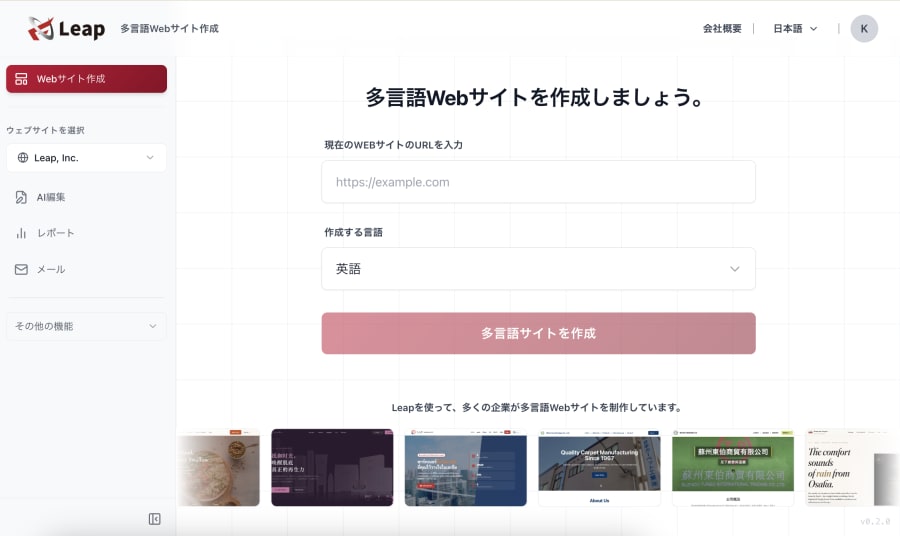
The table below compares the three platforms on fees, cross-border support, marketing features, and B2B support. For reference, it also includes Leap, a cross-border ecommerce tool that lets AI handle marketing too, as an own-store option. Because current fees for Tmall Global and JD Worldwide could not be confirmed on public pages, the figures shown are guidelines from a JETRO Beijing Office document (surveyed in March 2021).
| Item | Tmall Global | JD Worldwide | RED (Xiaohongshu) | Reference: Leap (own store) |
|---|---|---|---|---|
| What it is | Alibaba Group's cross-border marketplace | JD Group's cross-border marketplace | Lifestyle-sharing platform popular with young people (has ecommerce features) | Your own cross-border online store |
| Fees | Security deposit, annual service fee, and sales commission. March 2021 guideline: deposit RMB 50,000–300,000, annual fee RMB 30,000 or 60,000, commission 0.5–5% of sales | Security deposit, annual service fee, and sales commission. March 2021 guideline: deposit USD 10,000–40,000, annual fee USD 1,000, commission 0.5–6% of sales | Fees for overseas sellers not confirmed on public pages | From ¥0/month (excl. tax), 6% of sales (card processing included) |
| Who can open a store | Companies registered outside mainland China (including Hong Kong, Macao, and Taiwan). Trademark certificate or brand authorization required | Companies registered outside mainland China (same as left). A jointly liable guarantor in mainland China and an overseas corporate account that can settle in USD are required | Not confirmed on public pages | Japanese businesses |
| Cross-border support (language, currency, payment) | Chinese for shoppers; Chinese and English for sellers. Payment via Alipay | Chinese for shoppers. Payment via JD Pay | Chinese for shoppers | Multilingual, USD/EUR/JPY, Visa and Mastercard (no RMB or Alipay) |
| Marketing | In-marketplace traffic; certified service partners (TPs) that run stores for brands | In-marketplace traffic | Posts, KOLs (influencers), and live commerce | Automated blog creation (SEO/AIO), email newsletters, CRM |
| B2B support | Not applicable, since the cross-border system is for individuals' personal use | Same as left | Same as left | Dedicated B2B cart (company-specific pricing, quote requests) |
All three Chinese platforms are channels for selling to individual consumers in China. Leap covers mainland China as a supported country, but does not support RMB or mainstream Chinese payment methods such as Alipay. For selling directly to Chinese consumers, a marketplace is the better fit; Leap is more realistic as a Chinese-language company or product site, or as an inquiry channel for overseas business buyers.
Tmall Global: A Major Cross-Border Marketplace You Can Join Without a Chinese Entity
Tmall Global is a cross-border marketplace run by Alibaba Group, where many well-known overseas brands have stores. A JETRO Beijing Office document notes that its required deposit and fees are somewhat higher than other cross-border sites, and the bar for opening a store is a little higher.
- Who can apply: Companies registered overseas or in Hong Kong, Macao, or Taiwan. You need proof of rights such as trademark certificates for the products you sell; agents need a letter of authorization from the brand owner
- Priority applicants: Brands, agents, and department stores that have well-known physical stores or B2C sites but have not yet entered China are recruited on a priority basis
- Application process: Tmall Global's merchant recruitment page describes four stages: 1. submit application materials (about 2 hours), 2. review (about 7 business days), 3. sign the agreement and lock the deposit (about 1 day), and 4. list products and pay the annual fee before the store goes live
- How to check fees: The "入驻小帮手" (onboarding helper) on the recruitment page shows the required documents and fees
- Logistics: Cainiao, Alibaba Group's logistics company, offers an end-to-end service covering pickup, line-haul transport, warehousing, and delivery
Besides opening your own store, products can also be sold through Tmall Global's directly operated store. In 2023, JETRO and Tmall Japan jointly ran a support program that let Japanese companies sell through that store.
Tmall Global suits companies that are already recognized as brands in Japan and want a store under their own brand name in China.
JD Worldwide: A Cross-Border Marketplace Backed by Its Own Logistics Network
JD Worldwide is a cross-border marketplace run by JD Group. According to the JETRO Beijing Office document, JD Group operates its own logistics network and also provides shipping services to brands selling on JD Worldwide.
- Who can apply: Companies registered overseas or in Hong Kong, Macao, or Taiwan
- Requirements Tmall Global does not have: A jointly liable guarantor company in mainland China, and an overseas corporate bank account that can settle in USD
- Trademarks: You need trademark certificates for the products you sell. The JETRO document states that JD Worldwide requires a trademark certificate from your home country (Japan)
- Fees: As of March 2021, in addition to the deposit, annual service fee, and commission, brand flagship stores paid a special deposit (USD 5,000–30,000)
JD Worldwide suits companies that care about delivery and after-sales quality in China and want to hand off logistics as a package.
RED (Xiaohongshu): A Social Platform That Turns Reviews and Search into Purchases
RED is a lifestyle-sharing platform popular mainly with young people in China. Yoren, a support company officially certified by RED, describes RED as "a social commerce space where users' journey from discovering, searching, and comparing products to buying them is connected on one platform."
- Ecommerce features: RED runs an ecommerce business and officially certifies "ecommerce service providers (电商招商服务商)" that recruit brands and help them open stores. Yoren, a group headquartered in Japan, announced it received this certification in May 2026
- Link with marketplaces: In May 2025, Tmall and RED announced a partnership called the "Red Cat Plan," adding a feature that takes users from RED product ad posts to Taobao store pages
- Requirements and fees: The requirements and fees for overseas companies to open a store on RED could not be confirmed on public pages as of November 2026. Japanese companies can also work with a certified support company that handles everything from store setup to posts, KOL campaigns, live commerce, and logistics
RED suits cosmetics, fashion, and lifestyle brands whose value comes across when explained, such as how to use a product, its ingredients, or its design. Even if you sell on a marketplace, pairing it with awareness-building on RED can boost results.
Rules That Apply to Every Platform: Direct Shipping vs Bonded Warehouse
Cross-border ecommerce in China has two main fulfillment models, direct shipping and bonded warehouse, and the same rules apply whichever platform you use. JETRO's March 2025 report on China's cross-border ecommerce rules for agricultural and food products summarizes them as follows.
| Item | Direct shipping (customs code 9610) | Bonded warehouse (customs code 1210) |
|---|---|---|
| Where goods are stored | Outside China until an order comes in | In a Chinese bonded zone, with taxes deferred |
| How goods are delivered | Shipped internationally per order, then cleared through customs | Cleared after the order and delivered domestically from a bonded warehouse |
| Best for | Testing in small volumes without sending stock to China | Keeping stock in China and delivering quickly after orders |
The Positive List and Preferential Tax Treatment
Only products on China's Cross-Border E-Commerce Retail Import List (the "positive list") can be sold through cross-border ecommerce. According to the same JETRO report, the 2022 edition of the list (current as of February 2025) includes 1,476 items, covering food, clothing, cosmetics, home appliances, household goods, and more.
When a purchase through a platform connected to customs systems is RMB 5,000 or less per transaction and RMB 26,000 or less per person per year, import duty is 0%, and VAT and consumption tax are charged at 70% of the statutory amount. Transactions above these limits are taxed at the same rates as ordinary imports.
Tax Estimate Under the Preferential Policy
Using the formula in the JETRO report, we estimated the tax on a product with a 13% VAT rate and no consumption tax, bought by a Chinese consumer for RMB 400 (our own estimate).
| Item | Calculation | Amount |
|---|---|---|
| Import duty | 0% | RMB 0 |
| VAT (statutory) | RMB 400 × 13% | RMB 52 |
| Tax paid under the cross-border policy | RMB 52 × 70% | RMB 36.4 |
The buyer's tax comes to about 9.1% of the product price. The buyer is the taxpayer, and platforms, logistics companies, and others collect and pay the tax on their behalf. Note that some food products cannot be imported into China depending on where they were produced and what they are, so check JETRO's latest information.
What to Know When Selling to Chinese Consumers from Your Own Store
When a Chinese consumer orders from an ecommerce site operated outside China and the goods are delivered directly by international courier, the JETRO report calls this the "haitao" model. These goods are treated as personal imports (inbound articles) rather than under the preferential cross-border policy. Items that customs judges to be within a reasonable range for personal use, such as parcels totaling RMB 2,000 or less, are taxed at one of three rates by product: 13%, 20%, or 50%.
JETRO's trade and investment Q&A also lists Alipay and WeChat Pay as payment methods for cross-border sales to China. If you sell to Chinese consumers from your own store, check whether you can support these payment methods. A practical split is to let marketplaces handle sales to Chinese consumers and use your own site for brand information and business-to-business deals.
How to Choose a China Cross-Border Platform
Narrowing down in the following order makes the choice easier.
- Check the positive list: First confirm that your products are on the list and, for food, that they are not restricted by origin or product type.
- Check trademarks and seller requirements: Both Tmall Global and JD Worldwide require trademark certificates or similar documents, and JD Worldwide also requires a guarantor in mainland China. Registering your trademark in China before opening a store gives you peace of mind.
- Choose based on the costs you can bear: Check with each platform's merchant desk for the latest deposit, annual fee, and commission amounts.
- Decide where to build awareness: Simply opening a marketplace store won't get you noticed, so plan how to combine it with posts and KOL campaigns on RED or similar platforms.
In short: if you have brand strength and want a store under your own name, consider Tmall Global; if you want to hand off logistics and after-sales service, consider JD Worldwide; and if you first want Chinese consumers to know about you, consider RED. If you want to attract inquiries from overseas business buyers through a Chinese-language site, SEO, and email newsletters, an own store built with a tool like Leap, a cross-border ecommerce tool that lets AI handle marketing too, is another option.
FAQ
Q. Can I open a store on Tmall Global or JD Worldwide without a company in China?
A. Yes, companies registered in Japan can open a store. According to JETRO, both platforms accept "companies registered overseas or in Hong Kong, Macao, or Taiwan." However, JD Worldwide also requires a jointly liable guarantor in mainland China and an overseas corporate account that can settle in USD.
Q. How much does it cost to open a store on a Chinese cross-border marketplace?
A. You pay a security deposit, an annual service fee, and sales commission, with amounts that vary by category and store type. Guidelines in a JETRO Beijing Office document (surveyed in March 2021) were a deposit of RMB 50,000–300,000 and an annual fee of RMB 30,000 or 60,000 for Tmall Global, and a deposit of USD 10,000–40,000 and an annual fee of USD 1,000 for JD Worldwide. Check with each platform's merchant desk for current amounts.
Q. What is the difference between direct shipping and the bonded warehouse model?
A. Direct shipping keeps goods outside China and ships them per order, while the bonded warehouse model stores goods in a Chinese bonded zone in advance and clears customs after each order. Both qualify for the preferential cross-border tax policy, with 0% import duty on purchases up to RMB 5,000 per transaction and RMB 26,000 per year.
Q. Can I sell to China using only RED (Xiaohongshu)?
A. RED has ecommerce features, so selling there is possible. However, the requirements and fees for overseas companies could not be confirmed on public pages, so check with RED's official channels or a RED-certified support company. Building awareness on RED while selling on a marketplace such as Tmall Global is another option.
Summary and Key Takeaway
Success in selling to China depends less on which marketplace is cheapest and more on how you combine a place to sell with a place to be discovered. Tmall Global and JD Worldwide are major marketplaces where you can sell to Chinese consumers without a Chinese entity: Tmall Global is strong on brand presence, and JD Worldwide on logistics. RED supports marketplace sales as the place Chinese consumers research before they buy.
Whichever platform you choose, the shared rules on the positive list, preferential taxes, and trademarks stay the same. Confirming that your products are on the list and securing your trademark in China are the first steps to take, even before picking a platform.
Leap is a cross-border ecommerce tool that lets AI handle marketing too. Just chat with it to build a multilingual, multi-currency online store and run overseas marketing such as SEO and email newsletters.
References
- Results of the FY2025 E-Commerce Market Survey - Ministry of Economy, Trade and Industry (Japanese)
- Points to Note When Opening a Store on China Cross-Border EC (March 2021) - JETRO Beijing Office (Japanese)
- Survey on China's Cross-Border EC Rules for Agricultural and Food Products (March 2025) - JETRO (Japanese)
- Overview of and Points to Note on Cross-Border EC in China - JETRO Trade and Investment Q&A (Japanese)
- Xiaohongshu and Tmall Announce New Partnership - JETRO Business News (Japanese)
- New Package Support Scheme for Japanese Companies Entering China via Tmall Global - JETRO (Japanese)
- Merchant Recruitment - Tmall Global (Chinese)
- Platform Rules - JD Worldwide (Chinese)
- Yoren Receives Official RED (Xiaohongshu) "Ecommerce Service Provider" Certification - PR TIMES (Japanese)
- Pricing - Leap