

Takeyama Co., Ltd. is a Hokkaido-based medical device distributor that has grown over 90 years to reach approximately ¥70 billion in annual revenues. The company has built a rare capability in Japan — handling both pharmaceutical and medical device wholesale under one roof — and has developed deep expertise in orthopedics and cardiovascular medicine. Now, Takeyama is venturing into new frontiers: regenerative medicine, AI, and overseas expansion. We spoke with Executive Director and Head of the Marketing Division, Tetsuya Shimamoto, about how the industry is changing and what the company's digital strategy really looks like.
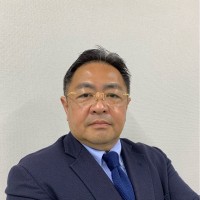
Tetsuya Shimamoto Executive Director and Head of the Marketing Division, Sales Headquarters, Takeyama Co., Ltd. Drawing on deep industry knowledge in the medical device distribution space, he focuses on developing and executing marketing strategies and driving sales. He also served as Chairman of Japan's first GPO (Group Purchasing Organization) operated by a medical device wholesaler for approximately five years, giving him a strong grasp of both the clinical environment and distribution channels. He leads his team with a focus on market expansion and improving customer satisfaction.
One Company for Both Pharmaceuticals and Medical Devices — The Strength of a Rare "One-Stop" Model
—— To start, could you tell us about Takeyama's business and what sets you apart?
Last year marked our 90th anniversary. We've been supporting healthcare institutions across Hokkaido throughout that time, but our greatest strength is the ability to handle both pharmaceutical wholesale and medical device wholesale under a single company. This is extremely rare nationwide — and I believe we were among the pioneers of this model.
For the purchasing staff at hospitals and clinics, sourcing pharmaceuticals and medical devices from separate vendors is a significant burden. Takeyama can consolidate that into a single point of contact. That convenience — and the opportunities it unlocks — is one of the biggest reasons healthcare institutions have chosen us for so many years.
In terms of specialization, we have particular strength in orthopedics, minimally invasive surgery (including robotic surgery), and cardiovascular medicine. Handling high-level specialist equipment isn't just about delivering products — it requires technical support for physicians and clinical staff. To that end, we established "Village Plus," Japan's first medical training center operated by a wholesale distributor, and we invest heavily in education and training support for healthcare professionals. There are very few wholesalers in Japan capable of providing surgical technique training and hands-on instruction for new devices.
We also participate in the MDL (Medical Device Logistics) Research Group, pursuing efficiency and standardization in healthcare supply chain management. In May 2026, as part of our push toward next-generation medical logistics, we announced Japan's first full-scale adoption of drones for company-operated deliveries — further establishing our presence as a company that is working to evolve the very infrastructure of healthcare.
The First Wholesale Distributor to Enter Regenerative Medicine — How We're Approaching Frontier Healthcare
—— Could you tell us about your new business initiatives?
Absolutely. One area we're particularly invested in is regenerative medicine. Takeyama was an early mover in the medical device wholesale industry — we began handling regenerative medicine products and services ahead of the broader market. We're building out a framework to offer affordable treatments to more patients, centered on outpatient or short-stay procedures such as adipose-derived stem cell therapy and AGA treatment using dermal cell transplantation.
Regenerative medicine is still in its early stages as a market, but in Japan — a super-aging society — demand will unquestionably grow. I believe there is tremendous significance in leveraging our specialist network and the trust we've built as a medical device distributor to bring these new treatment technologies to clinical practice.
The second pillar is the medical application of brain function AI. We have signed an exclusive distributor agreement with Neurophet, a Korean company, covering Japan — providing AI-powered diagnostic imaging for dementia, as well as "Alzwin," which assesses cognitive function through one minute of conversation using AI-based language fluency analysis. Dementia is one of the most serious diseases Japan must confront on a global scale. I'm convinced that AI-based early screening and diagnostic support will become indispensable to the healthcare system going forward.
We're also continuing to develop and validate AI medical tools. In the rehabilitation space, we handle "Prediction One," a patient prognosis prediction AI solution for rehabilitation wards provided by Sony Network Communications, designed to improve workflow efficiency in rehabilitation — a critical area for Japan's community-based integrated care system for an aging society. We're committed to riding the major wave of efficiency gains that comes from the fusion of digital technology and healthcare.
I've served as Chairman of Japan's first GPO (Group Purchasing Organization) for medical device wholesalers for roughly five years. That frontline experience gives me a ground-level sense of what technologies can actually work in clinical settings, and what is truly needed. That's one of our real strengths.
On the Front Lines of Global Expansion — The Real Picture in Korea, Singapore, and Thailand
—— Where does Takeyama currently stand on overseas expansion?
We have touchpoints with overseas markets in several ways. We have an information-sharing partnership through a Korean IT fund, and our collaboration with Neurophet — which I mentioned earlier — is one expression of that. Korea is advancing rapidly in medical AI technology, and there is a great deal Japan can learn from them.
With Singapore, we have exchanges centered on brainwave-related technology. Many Singapore-based companies are actually backed by Chinese capital, but the legal risks are lower than entering mainland China directly, making it a realistic stepping stone for expansion into Asia.
On China itself, we have to be cautious. Intellectual property protection, regulatory complexity, litigation risk — the barriers are simply too high for a mid-sized company to enter directly. In the past, we looked into marketing through the Chinese social media platform Xiaohongshu (RED), but cultural and linguistic barriers, along with regulatory uncertainty, made it difficult to move forward. I've come to feel that Taiwan and Singapore are more accessible markets for Japanese companies.
The market we're most focused on is Thailand. Through contact with local companies there, we've learned some important things: there is a very high density of drug stores handling respiratory disease products, and we're seeing a rapid expansion in demand for dementia care and rehabilitation driven by an aging population. The healthcare challenges of a "super-aging society" that Japan has already experienced firsthand align well with the solutions Takeyama has developed. Thailand is a market we intend to develop seriously going forward.
—— What are the first stumbling blocks for small and mid-sized companies when they try to go overseas?
I think the biggest barrier is a lack of information — and the paralysis that comes with it: "We don't even know where to start." Whether it's market research or finding local partners, trying to do it all in-house takes enormous cost and time. The key is to start small, move, and learn.
For example, even when thinking about expansion into Thailand, the right mindset isn't "sell to all of Thailand" — it's "test with specific healthcare institutions or pharmacy chains in Bangkok." By narrowing your target and going deep, you start to see the real challenges and needs on the ground.
What a Failed Online Venture 15 Years Ago Taught Us — The "Wholesale Industry Has No Advertising Culture" Problem
—— Can you tell us about where things stand with digitalization and e-commerce?
Actually, about 15 years ago, Takeyama launched an internal internet sales company. We sold health foods — including maca grown in Japan for the first time — but in the end, it didn't work out.
The core of the failure was the assumption that "if you put products online, they will sell." In reality, digital marketing requires specialized know-how: SEO to get found in search, the budget and knowledge to build awareness through advertising, and the architecture to guide users toward a purchase. Going in without that, you just get buried by the competition.
The wholesale industry has a structural problem: there's simply no culture of advertising or promotion baked into it. In a primarily B2B business, the dominant approach for decades has been "send a rep out to sell." Sales staff visit healthcare institutions, build relationships, and win orders. Because that approach has worked, it has been easy to feel that digital communication isn't necessary.
But that model alone won't hold going forward. Physicians and buyers alike now look up product information online first. If you have no presence on the web, you won't even make it onto the shortlist for consideration.
—— How did Leap's proposal strike you?
The idea of building an e-commerce site at low cost, and combining SEO with multilingual support to attract access from overseas — that struck me as sound and logical. The discussion about using AI for content creation was also interesting.
If you try to hire and develop your own digital talent internally, that alone involves enormous cost and time. But by working with an external partner, you can build the foundation with a small start and then scale based on results. If you're serious about overseas expansion, I came to believe that building a digital communication foundation early on is essential.
Takeyama's Strengths and the Vision Ahead
When you take stock of the strengths Takeyama has built over 90 years, they come down to the following:
A rare position as an integrated pharmaceutical and medical device wholesaler. A capability that is genuinely uncommon nationwide, delivering overwhelming convenience by consolidating procurement for healthcare institutions into a single contact point.
Deep expertise and frontline presence in orthopedics and cardiovascular medicine. Including education and training support for clinical staff through Village Plus, Takeyama delivers added value that goes far beyond simple product supply.
Pioneering advances in medical logistics. From the MDL Research Group to the full-scale introduction of drone-based next-generation medical logistics in 2026 — working to transform the infrastructure of the industry itself.
Bold moves into new domains. Leading the convergence of technology and medicine through regenerative medicine (a pioneer in wholesale distribution), AI healthcare (Neurophet partnership, Icoms establishment), and collaboration with Sony Network Communications.
A multifaceted network with overseas partners. Pipelines spanning Asia — Korea (IT fund and AI collaboration), Singapore (brainwave technology), and Thailand (dementia and respiratory disease needs).
A Message for Small and Mid-Sized Business Leaders Pursuing Global Expansion
—— Finally, do you have any advice for owners and global business managers at small and mid-sized companies considering overseas expansion?
Japanese companies — particularly regional small and mid-sized businesses — often have world-class strengths that simply aren't visible from the outside. In Takeyama's case, things like our regenerative medicine lineup, our AI-based dementia screening, and our drone-powered medical logistics represent technologies and services with real value in Asia's developing healthcare markets.
The problem is that the value isn't being communicated. If you only have a Japanese-language website, no matter how interested an overseas healthcare institution or investor might be, they have no way to look into the details. And trying to communicate through social media runs into cultural and linguistic walls.
So the first thing you need is a digital foundation capable of communicating in multiple languages. The ability to publish content in English, and in the languages of your target markets — Thai, Korean, and others — is the first step toward building trust with local audiences.
The next priority is SEO strategy. When a local buyer or healthcare institution searches for "medical device wholesale Japan" or "dementia screening AI," does your page appear near the top of the results? That is the starting point for generating international inquiries.
Takeyama itself is still developing on the digital and overseas expansion front. But the expertise and trust we've built over 90 years are the real thing. If we can amplify those strengths through the power of digital, I believe it will lead to a major leap forward into our next 90 years.
References
Interview courtesy of: Takeyama Co., Ltd. — Tetsuya Shimamoto, Executive Director, Head of Marketing Division, Sales Headquarters