

Japanese companies' enthusiasm for overseas expansion has surged dramatically in recent years. The accelerating depreciation of the yen, a shrinking domestic market, and a wave of AI-driven operational efficiency — these forces have converged to create a growing sense among small and mid-sized businesses that "now is the time to go global."
Yet the question most business leaders face first is: "Where do we even begin?" Building a multilingual website, reaching local markets, and recruiting talent who can deliver results overseas — when these three elements align, overseas expansion becomes a reality.
For this interview, we spoke with Mukmin Faris, a consultant at Morgan McKinley Japan who specializes in sales talent placement for Japan's IT and SaaS industry. Drawing on his background as a Malaysian national and his front-line perspective in technology sector recruiting, he shared his approach to cracking overseas markets and the talent profile the AI era demands.

Mukmin Faris Morgan McKinley Japan | Enterprise Technology Division Consultant | Enterprise Technology Specialist. Specializes in recruiting sales professionals across SaaS, cloud, cybersecurity, and AI domains. Supports a wide range of Japanese and foreign-owned companies, with expertise in identifying revenue-generating and customer-facing talent — from mid-to-senior individual contributors to leadership hires. A biology major at Utsunomiya University, he moved into sales and recruiting at an advertising agency before joining his current role. Originally from Malaysia.
What It Takes for a Website to Truly Resonate in Southeast Asian Markets
──First, could you walk us through your thoughts on web strategy and information outreach for Southeast Asian markets — particularly Malaysia? What does a Japanese company need to do to make its mark locally?
"Translation" and "localization" are completely different things. This is a distinction many Japanese companies blur.
Southeast Asian markets like Malaysia are moving fast on digital adoption, but the barriers of genuine multilingual support and locally adapted design remain high. Simply replacing text with English won't resonate with local users. Color palettes, layouts, copy tone — all of it needs to be designed with local sensibilities in mind.
Malaysia, for example, is a multilingual society where Malay, English, and Chinese (Traditional) all coexist. Which language to lead with depends on the audience you're targeting. For Malay-speaking users, an approach in Bahasa Malaysia creates familiarity; for ethnic Chinese users, Traditional or Simplified Chinese can be more effective. The same applies in Vietnam and the Philippines — even a single language choice requires careful, market-specific calibration.
Beyond language, it's critical to convey pricing transparency and to make the case for "why choose this Japanese company?" from a local user's perspective. Trust in Japanese quality does run deep across Southeast Asia — but it isn't inherited automatically. It has to be expressed as content and delivered in a culturally resonant form.
──What about cost? Localizing a website has a reputation for being expensive.
That's something that's changing significantly. Until recently, just building a three-language website meant hundreds of thousands to millions of yen upfront — translation agencies, web designers, SEO specialists, all billed separately.
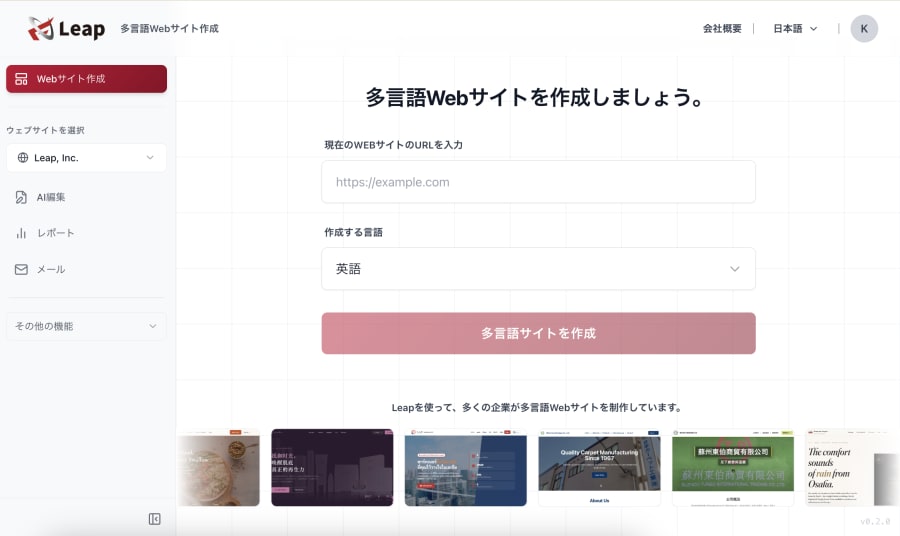
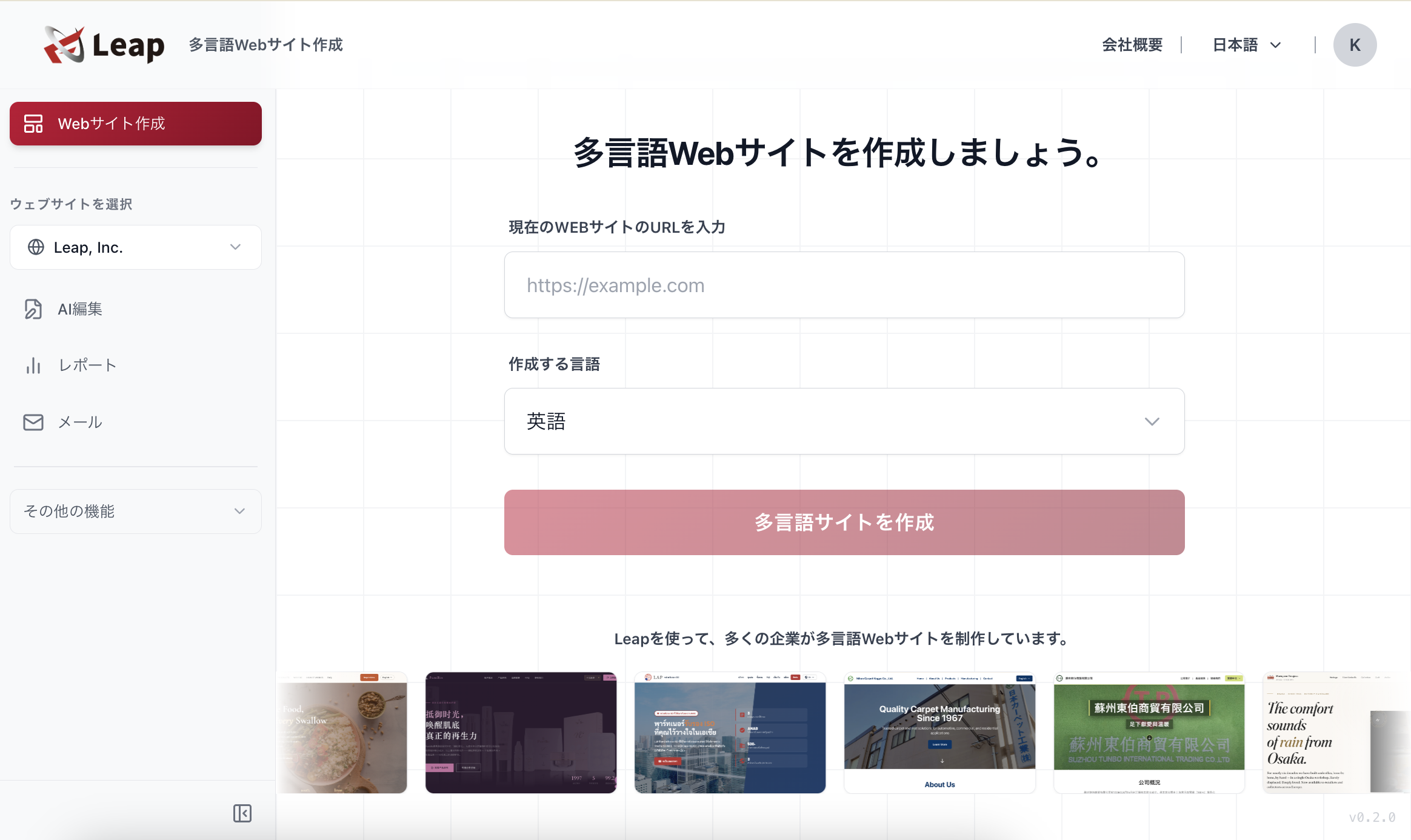
Today, AI-powered tools make it possible to build and operate a multilingual site at a completely different price point — around ¥10,000 per month. I've run communities and content initiatives aimed at Malaysian audiences myself, and even from a local perspective, that balance of accessibility and quality is genuinely impressive. The barrier to entry for startups and SMEs has dropped dramatically.
The assumption that "going global costs a lot" has held Japanese companies back from taking that first step. Now is exactly the time to update that perception.
The Real Challenges Japan's IT Companies Face Right Now
──From your perspective in talent recruiting, what structural challenges are Japan's IT and SaaS companies dealing with?
I see three consistent structural challenges.
First: failing to break free from feature-driven sales organizations. The functional gap between SaaS products is shrinking fast as AI advances. Any company can now build a product with a comparable feature set. In that environment, explaining "here's what our product can do" no longer differentiates. What customers actually need is a solution to their business problem. The salespeople in demand today are those who listen deeply, find the connection between a customer's challenge and the product, and walk alongside them through the process. Japanese IT companies still tend toward product-out thinking. They invest in feature development but are weak at designing the "story" that communicates what those features actually mean for the customer. That's less a talent quality issue than a structural and cultural one.
Second: underinvestment in customer success. SaaS revenue runs on subscriptions. That means winning a new customer accomplishes nothing if they can't use the product effectively and eventually churn. Controlling churn requires proper onboarding post-implementation and sustained success support. In practice, customer success functions are often either underdeveloped or conflated with "support" and undervalued. Many companies that feel their revenue isn't growing actually have a retention problem, not an acquisition one.
Third: underutilization of global talent. When Japanese IT companies try to capture overseas markets, there's a severe shortage of people who understand local languages, cultures, and business customs. Placing English-capable Japanese staff overseas is common — but that's a world apart from the intuitions of someone who grew up in that environment. If you're entering Southeast Asian markets, the fastest path is to build in people who are from the region, or who are bilingual and deeply immersed in that culture. Localization is delivered not only through translation tools, but through people.
The Reality of AI Adoption — the Gap Between "Using It" and "Using It Well"
──With the AI boom, how far has actual adoption progressed on the ground at companies?
Honestly, a significant gap has opened between companies that are "using AI" and those that are "using it well."
Many companies have deployed tools like ChatGPT or Copilot, but usage has stalled at "polishing email copy" or "summarizing meeting notes." That's using roughly 5 to 10 percent of what AI can do. In the sales process specifically, AI delivers its real value in situations like these:
- Lead list building and targeting automation: automatically generating leads based on criteria like industry, company size, and job title, then prioritizing outreach.
- Generating personalized proposal materials: input a prospect's company background, challenges, and competitive landscape, and get an individually tailored proposal draft in minutes.
- Post-meeting follow-up automation: hand meeting notes to AI and automatically get next actions, follow-up emails, and minutes.
- Budget and decision-process analysis: train AI on historical win/loss data to identify customer patterns with higher close probability.
Combining these approaches literally more than doubles the number of at-bats a single salesperson can take. If 10 outreach attempts per day was the previous ceiling, AI enables 20 to 30. Same headcount, higher volume and quality simultaneously. Among companies I support with recruiting, sales organizations that have strategically integrated AI are clearly outperforming those that haven't. What determines success isn't whether AI is deployed — it's which processes it's embedded in and how.
──On the flip side, there's a lot of anxiety about AI replacing sales jobs. What's the reality?
This is one of the questions I hear most in the recruiting market. The short answer: there's a clear bifurcation between "sales roles that will be replaced by AI" and "sales roles whose value will be elevated by AI."
What gets replaced is sales work centered on routine tasks — information gathering, organizing, and sending follow-ups. Conversely, handing those tasks to AI and focusing on building client relationships, the listening skills to identify the real problem beneath the surface, the persuasion to move decision-makers — the market value of salespeople who can do this is rising fast.
AI cannot read a customer's emotions and build a trust relationship. Drawing out someone's real intentions in a negotiation, making them feel "I want to trust this person with this" — that remains exclusively human territory. Which is why competition for salespeople with genuine interpersonal skills is actually intensifying.
The Talent Market Today — the Evaluation Criteria Recruiters Actually Use
──From the recruiting side at Morgan McKinley, what does the most-wanted talent profile look like for IT and SaaS companies right now?
The "official" hiring requirements and the "real" ones diverge. Job descriptions say things like "English at JLPT N1 level" or "3+ years of SaaS sales experience" — but what hiring managers are ultimately looking for is something else.
The first thing is learning velocity. The technology world changes too fast. A product that was cutting-edge last year can be obsolete this year. Can this person keep pace and continuously update themselves? In interviews, I always ask: "What's something you've learned on your own recently?" and "How have you applied it to your work?"
The second is data conviction — the ability to quantify results and articulate them. SaaS sales runs on metrics — pipeline management, ARR (Annual Recurring Revenue), churn rate. People who can express their impact in data terms are valued everywhere. Someone who can say "I increased pipeline by 40% QoQ and contributed ¥X to ARR" rather than "I worked really hard" is dramatically more competitive in the talent market.
The third is adaptability to diverse environments. At a foreign SaaS company, having teammates in India, the US, and Singapore is unremarkable. Asynchronous communication, cultural differences, presenting in English — can this person handle all of this without stress, and even enjoy it?
──What type of candidate tends to struggle in the market?
The "I can do anything" pitch surprisingly tends not to land offers. Without a visible, specific strength, the hiring side concludes: "Without a sharp edge, this person won't survive a fast-moving environment."
People who cite "unhappy at my current job" as their reason for changing also tend to be weak candidates. Why this company? Why this product specifically? Someone making an "offensive job change" — pursuing something, not escaping something — comes through much more clearly to recruiters.
What SaaS startups aiming to accelerate overseas expansion want are people who carry their own vision and can operate autonomously in uncertain environments. "Highly capable instruction-followers" thrive in large corporations, but in a growth-stage organization, they often don't fit.
Hiring Strategy for a 10-Person Startup
──For a startup still building brand recognition, how do you attract strong talent?
Recruiting is the same as marketing. People don't come to a company they don't know about. So the first step has to be getting noticed.
The most immediately effective channel is consistent presence on LinkedIn. When CEOs and core team members share their vision, their passion for the product, and their day-to-day trials and errors, it communicates the context of "this is what this company stands for and how it operates." That creates the emotional resonance of "I want to work there" — which beats a spec list every time.
What matters is publishing not "our tool's features" but "the people inside and their energy and convictions." Less product introduction, more WHY — "why we're building this," "what we're trying to change." That's what pulls in people who fit the culture.
Direct recruiting (proactive sourcing) should also be actively leveraged. Rather than waiting for applications, define your target talent profile precisely and approach candidates actively. When engaging agencies like Morgan McKinley, providing a detailed qualitative and quantitative description of the person you're looking for is what improves matching accuracy.
Overseas Expansion × AI × Talent — Three Multiplied Together Changes Japanese Companies
──Finally, a message for executives and overseas expansion leads at SMEs considering going global.
"Overseas expansion," "AI adoption," and "talent strategy" — these have traditionally been thought about separately, but going forward they need to be designed as one integrated system.
Use AI to launch a multilingual site at low cost and reach local markets. Simultaneously, hire globally capable talent who can leverage AI and build a customer experience that resonates with local culture and language. When that multiplication works, Japanese SMEs can develop overseas markets with a speed and precision that was simply not possible before.
I often hear "we're still small" or "we don't have English speakers." But today, that very smallness — that speed and flexibility — is a competitive advantage. SMEs that make decisions fast and adapt quickly to change can take the initiative where large corporations can't move.
On the talent side: for startups and growth-stage companies, "hire for vision alignment and willingness to run alongside you" matters far more than "hire for perfect spec match." That's not lowering the bar — it's changing the evaluation axis.
Web presence, employer branding, building local networks — none of this needs to be perfect all at once from the start. Begin with what's possible, one step at a time, and improve based on data. That, I believe, is the path that ultimately leads to successful overseas expansion.
Summary: Three Perspectives for Overseas Expansion in the AI Era
Three key insights emerged from this interview.
- Localization starts not from "translation" but from "cultural understanding" Multilingual support is a prerequisite, but UI/UX and content designed to match local users' sensibilities, culture, and aesthetic expectations are what win trust and attract traffic. With AI tools, the cost of achieving this has dropped dramatically.
- "Using AI" and "using AI well" are entirely different AI can automate the routine work in a sales process. The differentiator is which processes it's embedded in and how — organizations that have designed this well are running ahead in both recruiting outcomes and business performance.
- Hire for cultural fit and self-direction, not just specs Growth-stage organizations need people who can share the vision in uncertain environments and keep moving forward under their own power. For global fit, a mindset that genuinely enjoys diverse environments matters more in the long run than English proficiency alone.
Overseas expansion is no longer reserved for large corporations. Combine the powerful tool of AI with the right talent strategy, and the era when SMEs can compete globally has arrived.
For inquiries and recruiting consultations with Morgan McKinley: Morgan McKinley Japan
Try Leap's multilingual AI web creation tool: Get started for free →